

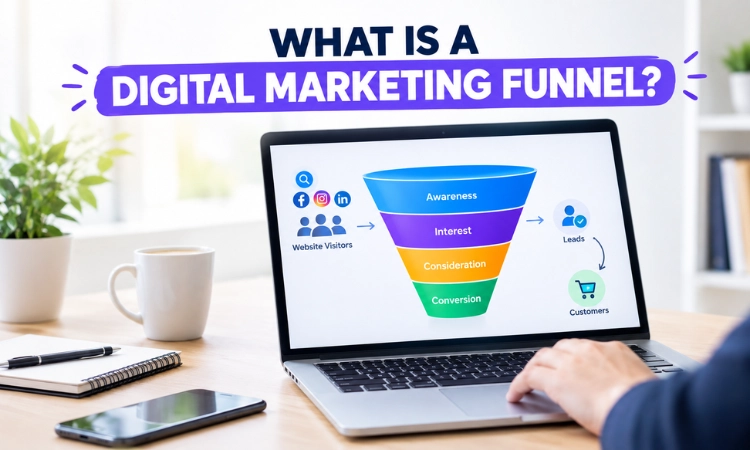
What Is a Digital Marketing Funnel and How Does It Work?
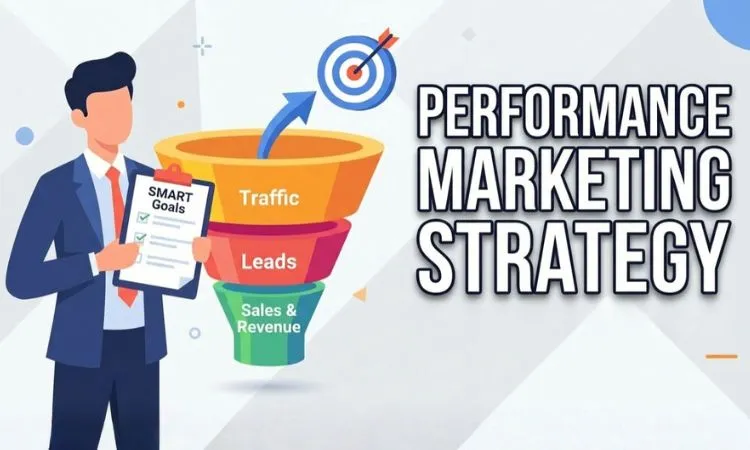
A person can discover a brand on Google today, follow it on Instagram tomorrow, read a blog next week and finally become a customer a month later. Online buying rarely happens in one straight step. There are usually several small interactions in between, and each one can influence whether someone moves closer to a purchase or simply disappears through a lead generation funnel. This is where a digital marketing funnel becomes useful. Instead of treating every visitor, follower or lead in exactly the same way, a funnel helps businesses understand where people are in their buying journey and what they may need next. For a growing business, this matters quite a lot. Getting people to your website is one thing, but helping them move from first discovery to enquiry, purchase and repeat business is where the real marketing work starts. What Is a Digital Marketing Funnel? A digital marketing funnel is a framework that shows how a person moves from first discovering a business online to becoming a customer and, ideally, staying with the brand afterwards. It gives marketers a way to organise different activities according to where a potential customer is in their journey. Think of it as a map rather than a strict path. Someone may discover your company through Google, while another person might first see you on social media. They can enter at different points, leave for some time and return later. The funnel simply helps you understand these movements better. The idea behind a funnel in digital marketing is fairly straightforward. At the top, there may be thousands of people who have never heard of your brand. As they develop interest, compare options and eventually make a purchase, the number of people usually becomes smaller. A random marketing campaign, on the other hand, may have several good activities but no clear connection between them. You might run Google Ads, post on Instagram and publish blogs, but if these activities are not helping people move towards a specific next step, the overall strategy can become difficult to measure. A structured funnel connects these activities. It asks a simple question at every stage: what does this person need right now, and what should encourage them to take the next step? How Does a Digital Marketing Funnel Work? The basic idea behind how digital marketing funnel works is that people don’t usually make a buying decision immediately after finding a brand. They first need to notice it, understand what it offers, decide whether it is relevant and then feel confident enough to take action. At each stage, a digital marketing consultant uses different content, channels and messages. A person who has never heard of a company doesn’t need the same message as someone who has already requested a quotation. This is also why one campaign cannot always do everything. A social media post may be excellent for generating awareness, but it may not be enough to convince a high-intent prospect to purchase a ₹1 lakh service. The funnel gives every marketing activity a purpose. SEO can bring people into the journey, content can answer their questions, remarketing can bring them back, and email can keep the relationship active. A good funnel is also not completely linear. People can move backwards, skip stages or spend a long time in one stage. The framework is there to make the customer journey easier to understand, not to force every person through identical steps. What Are the Main Stages of a Digital Marketing Funnel? The main stages usually begin with awareness and gradually move towards conversion and retention. Different businesses may name or combine these stages differently, but the basic idea remains similar. 1. Awareness Awareness is where the customer first discovers your brand, product or service. They may not be ready to buy anything yet. In fact, they might not even know they have a problem that your business can solve. At this point, the goal is visibility. SEO, social media, YouTube videos, display advertising and educational content can all help introduce the brand to relevant audiences. For example, someone searching for “how to improve website traffic” may find an agency’s blog. They weren’t necessarily looking for an agency. They were looking for an answer. That first interaction can still become valuable because the brand has now entered their mind. 2. Interest Once people know that your brand exists, the next challenge is giving them a reason to pay attention. This is the interest stage. Here, visitors may read several articles, explore your social media page, watch a video or sign up for a newsletter. They are trying to understand whether your brand actually knows what it is talking about. Useful content becomes particularly important here. A Digital marketing expert, for instance, may use detailed guides, case studies and educational resources to demonstrate knowledge without immediately asking the visitor to buy something. The objective is to turn casual attention into genuine curiosity. 3. Consideration At the consideration stage, the person has moved beyond basic curiosity. They are now thinking about possible solutions and comparing different businesses, products or services. This is where trust starts playing a much bigger role. Reviews, testimonials, case studies, pricing information, comparison pages and service details can help remove doubts. A customer journey funnel is useful here because it allows a business to understand what information a potential customer may need before making a decision. Someone considering an SEO service, for example, may want to understand the benefits of hiring an SEO consultant, what work is involved, how long results could take and whether the agency has worked with similar businesses. 4. Conversion Conversion is the stage where a prospect takes the action the business wants. This could mean making a purchase, filling out a form, booking a consultation, signing up for a service or requesting a quotation. The action depends on the business model. An ecommerce company may consider a completed checkout as its main conversion, while a B2B company may consider a qualified enquiry
What Is a Digital Marketing Funnel and How Does It Work? Read More »