Digital Marketing Consultant in India – Pranav Jha

Scale Faster with AI-Driven Digital Marketing Strategies

Digital Marketing Consultant in India – Pranav Jha

Helping 100+ Startups Grow with AI Marketing

SEO Strategies

geo strategy for ai search

Generative Engine Optimization in 2026: What 100+ Brand Audits Taught Us About Getting Cited in ChatGPT, Perplexity, Google AI & Claude

GEO, or Generative Engine Optimization, needs evidence, not some basic assumptions. Most businesses invest in tactics that Google has confirmed time and time again have zero impact on AI citations. Authentic visibility requires strong substance over any kind of shortcut. Based on the brand audit of 100+ brands, I reveal what can drive the visibility across multiple AI systems, from ChatGPT, CoPilot, Google AI Overviews, Perplexity, and more. This guide will separate the proven strategies from the non-working myths.  The Fact: Most agencies still sell these debunked tactics because these are easy top packages plus price. But the modern AI engines do not reward technical shortcuts; these reward source authority, structured clarity, and original data. If the GEO strategy does not include verifiable proof points, you’re actually optimizing for the wrong system. GEO (Generative Engine Optimization) This is the practice of optimization of content that can be cited as being a trusted source for AI systems like ChatGPT, Google AI overviews, Claude, CoPilot, or Perplexity. Unlike the traditional SEO, the GEO focuses on entity authority, first-party evidence, and structured clarity that the AI models prioritize when they are generating answers.  For AP Web World, we have been auditing numerous brands from D2C, real estate, education, and all across the years. This guide I will be talking about can move the needle for AI citation and what’s not working and is just pure marketing noise. What GEO Actually Means (And What It Doesn’t) Let’s start with clearing that basic confusion: SEO vs. GEO vs. AEO.  The guidance of May 2026 given by Google states that optimization for AI search is still considered SEO. But for the right practice, the major AI engines are Google AI overviews. CoPilot, Perplexity, Claude, and ChatGPT: the source and weight of content are different than other search algorithms. Approach Main Goal Signals Great For  Traditional SEO Ranking #1 for organic results Backlinks, Keywords,  technical health Driving clicks through searchers AEO (Answer Engine Optimization) Appears under featured snippets FAQ schema, Direct answers, concise formatting Voice search & quick-answer ways GEO (Generative Engine Optimization) Being cited for AI-generated answers Structured clarity, Entity authority, first-party evidence,  Brand visibility for AI conversations The Contrarain’s Take: If the GEO strategy can look identical for your 2025 SEO checklist, you’re optimizing for the wrong systems. AI engines not just rank those pages, they also evaluate sources as well. Also Read: What is Generative Engine Optimisation The Four-Engine Reality: How Each AI System Sources Content These are the main AI engines that are there; if we talk about CoPilot, Grok, and others, they follow the same path as these four major engines: Google AI Overviews How it sources: Pulls that from those high-authority domains for the strong E-E-A-T signals, thus prioritizing content for clear structure and clear updates.  What it cites in a disproportionate way: .edu/.gov domains, brands-owned properties for verified schema, and content that’s updated in the last 90 days.  One major tactic: Implementation of article schema with the author for datPublished fields. Google’s AI weights recency and authorship heavily.  ChatGPT (Open AI)  How it sources: Trained for the static corpus (cutoff: late 2023 for GPT-4), but using browsing for real-time queries. Prioritization of domains for high-trust sources for the internal ranking system.  What it cites in a disproportionate way: Reddit threads (46.7% of the Perplexity citations that appear in ChatGPT), established news outlets, YouTube transcripts.  One Specific Tactic: Earning organic mentions for high engagement Reddit communities, AI models can treat these as “real human consensus.”  Perplexity AI How it sources: Using the two-gate model: retrieval selection or finding sources for answer absorption (weighting them). For the freshness plus domain authority for the critical gates.  What it cites in a disproportionate way: The domains for DR >50 can appear for the AI answers for 5X more than DR <30 (GEO Report 2026 from SEMrush). Thus favoring the sources for clear data visualizations.  One Specific Tactic: Publishing original research for the charts, Perplexity can cite data-rich content for 32. X much more for text-only articles (LLM citation analysis of Surfer SEO).  Claude (Anthropic) How it is sourced: Prioritization of long-form, nuanced content for clear augmentation. Values for “helpful honesty” for the promotional language.  What it cites in a disproportionate way: Expert-authored content for transparent methodology, and the sources can acknowledge limitations or the counterarguments.  One Specific Tactic: Including “Limitations” specified for pillared content, Claude thus rewards intellectual honesty for higher citation likelihood. Engine x Top 3 Signals Matrix Engine Signal #1 Signal #2 Signal #3 Google AI Overviews Recent (<90 days) Verified schema markup DR of 50+ ChatGPT Community/Reddit  mentions Availability of YouTube transcript  Brand Search volume Perplexity Original visualizations/data  Domain rating (DR) Fresh signals Claude Author credentials Balanced Argumentation Basic transparent sourcing The 4S Method: Our Framework for AI Citation After auditing of 100+ brands, we have created a 4S method, the four pillars that correlate for those AI citations for engines: 1. Source Authority Definition: The perceived trustworthiness of your domain plus authors for the eyes of AI training data plus retrieval systems.  Why AI engines reward that: AI models are trained for avoiding hallucinations for prioritization of sources for those established credibility signals.  Executable Tactics: Publishing of author bios for verifiable credentials (publication, LinkedIn) further linking towards them for using the schema.  Client one-liner: After adding the verified author schema for your coaching content, the citations for Claude are increased to 340% in just 6 weeks. 2. Structure Definition: Content organized for easy extraction, direct answers, clear headings, semantic HTML, and logical flow.  Why AI engines reward it: Structured content can reduce parsing errors and increase the likelihood of accurate extraction.  Executable tactic: Placement of 40 to 60 word direct answers under the H2 question based, then followed by supporting detail.  Client One-liner: Restructuring of skincare blog for answers—first the H2s and then leading to 23 citations in under 7 weeks. 3. Signals Definition: Evidence of a first-party system plus engagement metrics that can validate quality content beyond just
Generative Engine Optimization in 2026: What 100+ Brand Audits Taught Us About Getting Cited in ChatGPT, Perplexity, Google AI & Claude Read More »

how to generate leads from seo

How to Generate Leads from SEO: The Complete Guide for 2026

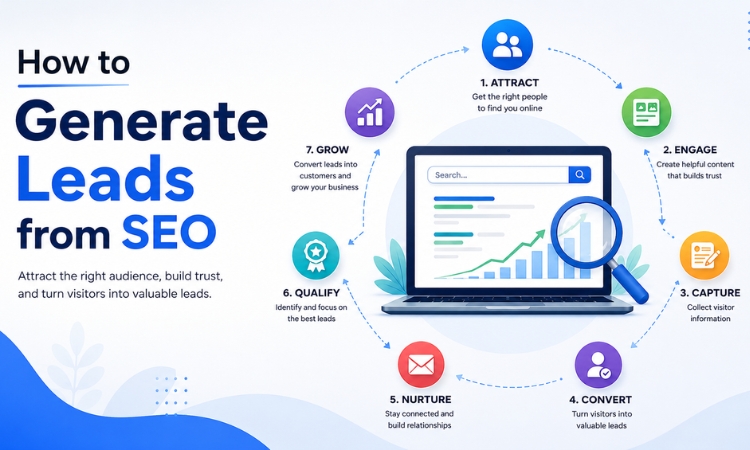
Need more customers from Google? You need to understand how to generate leads from SEO. Most businesses focus on ranking as #1, but traffic will not pay your bills; instead, leads and conversions do. So the question arises as to how to get SEO leads. This is where I can help. Still today, organic can deliver great ROI, but only if you can optimize towards the right conversions & not just clicks, as I told you before.  The simple truth here: A basic visitor that can fill out your contact form is 100X more than a person who is just reading the content and then leaves. I have designed this guide to provide you with the perfect SEO lead generation strategy for turning these searches into those paying customers. Whether you have a local shop, or a big B2B service, or are running an online store, mastering SEO for lead generation can help each visitor towards real business growth. No fluff, just some great strategies that will work. What Is SEO Lead Generation? SEO lead generation is a procedure for the optimization of your website for attracting high-intent users plus converting them to qualified prospects through organic search. Unlike those paid ads, these leads directly come from the unpaid rankings, thus building a grand asset value. In simple terms, SEO helps your business: Get found on Google Attract targeted users Build trust through content Convert visitors into customers Example: If someone searches: “Best SEO agency in Delhi” “Hire SEO expert near me” “SEO services for startups” These users already have buying intent, making them highly valuable leads. Traffic vs. Leads: The Important Difference Metric Traffic Leads Basic Definition Amount of visitors for your site Users that take a certain action (call, fill form, etc.) Goal Visibility + Awareness Revenue + Business Growth Value Lower (When not targeted) Higher (Straight business impact) Example 10,000 visitors viewing a blog 500 visitors wanting/requesting a quote Why Businesses Focus On Leads, Not Just Rankings Ranking #1 towards “what is SEO” can bring traffic, but the rankings for “hiring an SEO expert” can further bring in leads. Businesses that are focusing on generating leads using SEO actually prioritize those commercial intent keywords that can signal a customer’s buying readiness, thus signaling that marketing spends are going for profits. How SEO Generates Leads SEO is not magic; this is in reality a funnel. This is how the process works from search to scale:  Search: The user types in a query in the search engine.  Website visit: Your page (that’s ranking) gets clicked based on it.  Trust building: Content can establish authority + solve problems.  Action: Users click for CTA (call-to-action) for conversion.  This is the basic process of SEO and how to generate business leads using SEO. The SEO Funnel Explained This is the SEO funnel explained through an SEO expert:  Top of Funnel (TOFU): Information queries (Example: “How to fix leaky water tap”). This will build awareness.  Middle of Funnel (MOFU): Processing commercial investigation (Example: “Best electrician near me”) This will build consideration.  Bottom of Funnel (BOFU): Transaction queries (Example: “Hire emergency plumber”). This can drive conversion.  To master how to get leads from website traffic, you need to generate content for every stage above, guiding those users to this funnel, and make them ready to buy. Types of SEO Leads Not all the leads are created equal. Understanding the right intent is important for organic lead generation tips. Information Leads (Earlier Stage): These types of users are searching for knowledge (for example, “What is GEO?”). These users are not ready to buy but can be nurtured through email newsletters.  Commercial Leads (Comparison Stage): These users are comparing different options (for example, “SEO freelancer vs SEO agency”). These are categorized as warm leads and need proof of expertise.  High-intent leads (ready for conversion): These are the users who need solutions (for example, “Buy SEO service India”). These are the high-priority most valuable leads for getting that immediate revenue.  Who is the most valuable? The high-intent leads that can convert fast, but the informational leads can actually build that for long-term authority. A perfectly balanced SEO lead generation strategy can target both for maximization of pipeline growth. Step-by-Step SEO Lead Generation Strategy Ready for the implementation? Follow the right roadmap to generate business leads using SEO: Target the High-Intent Keywords Focus on the keywords for commercial intent. Use tools like SEMrush or AHREFs for finding the terms for “buy” or “service” or “hire” towards the “price” modifiers. These users are close to purchasing. Creating conversion-focused content Do not write for the bots. Writing for humans that are ready to act. Ensuring that each page can answer the problems clearly and offering the solution immediately. Optimization of landing pages The service pages need to be fast and sleek. Remove any kind of distractions and highlighting of benefits, plus ensure the path can be important and obvious. The speed matters: 53% of the mobile users can easily leave if the page takes more than 3 seconds to load. Adding Strong CTAs Each page does need a clear CTA (call-to-action). Use action-oriented text like “Get a Free Audit” instead of the vague “Submit” buttons. Placing of CTAs above for the fold and at the end of content. Using Lead Magnets Give the free users a great reason for sharing content info. The effective magnets: Free Audits: Analysis of current SEO health. Free consultation: Offering 15 minutes of right advice. Free Checklist: Providing a downloadable resource (for instance, an SEO Launch Checklist) Why the users can convert: Lead magnets can reduce risks. They can provide immediate value for exchange in contact details, thus warming up the cold traffic. Build Trust & Authority Display of client logos, case studies, and testimonials. As the SEO expert, I can prove success and thus reduce hesitation. Experience, Expertise, Authoritativeness, and Trustworthiness (E-E-A-T) are key ranking factors that can boost conversion. Internal Linking Strategy Linking of informational blogs for the service pages. This passes

How to Generate Leads from SEO: The Complete Guide for 2026 Read More »

SEO vs. AI: Why the “SEO is Dead” Hype is a Complete Myth

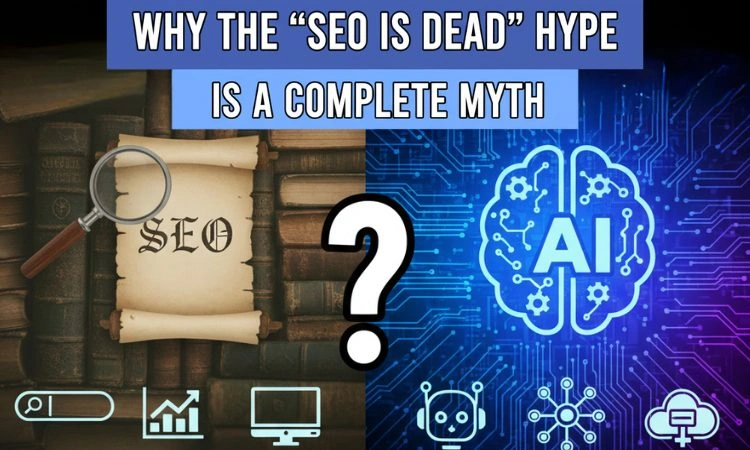
We have to be real here. These days, when you scroll across Instagram, LinkedIn, or YouTube, you come across these videos. These videos are extremely catchy, with clickbait thumbnails telling you “SEO is DEAD” or “AI has killed SEO.” You know these people who put these over-the-top thumbnails and extremely urgent messages. These are the classic clickbait strategies, that is, trying to tell you that everything you’ve learned about SEO is just “DEAD” and digital marketing is done or “OBSOLETE.” Let’s Sprinkle Some Facts. Here are some of the facts: SEO is not dead because of AI. Actually, SEO has become even more important. If not, AI has made great SEO practices even more critical. Let me explain why these “SEO is dead” videos are actually just some kind of thin air facts. Massive Misunderstanding: AI Doesn’t Replace Search—It Relies on It We heard this term, “Data is the new oil.” Well, that’s what SEO is: “Data.” Without that data, AI can’t do anything. We all drive cars, and we need fuel or electricity (in the case of EVs) to drive them. SEO is the fuel that drives the car of AI.  Now let me clear up this misunderstanding, or rather, I will call it “misinformation,” that is, “SEO is DEAD” videos are watched like there’s no tomorrow. All these AI tools like Gemini, ChatGPT, CoPilot, Claude, Grok, and Llama don’t get content from thin air. They just don’t magically operate out of nothing. They get their information from the web, as in the same traditional search engines like Google or Bing do.  When your favorite AI tool is providing that answer to you, they are pulling that answer from those websites that actually rank high on Google, Bing, etc. When the AI Mode of Google or Google Overviews shows up with some answers, these are all summarizing content from the websites that have great SEO fundamentals. AI is not replacing search engines—it’s actually built on top of that. The New Door Think in this way: AI is just a brand new door for the internet, but SEO is where everything is decided and what rooms people can go into. Without having SEO, your content is just not invited to this party—whether it’s for Google Search or responses from CoPilot or ChatGPT. Why SEO Principles Are More Important Than Ever Let’s break down why SEO is actually going up in this era: 1. Authority Still Rules  Let’s go back to those “SEO is Dead” videos. They ignore that all the AI models generally prioritize content that is authorized. ChatGPT is not just coming up with results—it works based on reputable websites. The AI overviews of Google pull from those top-ranking pages. The domain authority along with the backlink profile and the brand mentions are more than just obsolete—they are actually more valuable than ever. In fact, AI models can directly use exact signals for determining what type of content to trust. If your website has great SEO fundamentals, the AI tools put your content at the top. If you don’t do SEO, you’re invisible to both humans and now AI also. 2. Content Quality Matters More Than Ever AI is not a magical content generator that makes the quality of the back thing irrelevant. It’s the complete opposite—the models that AI tools are trained for high-quality content. They learn precisely what constitutes high-quality content that is recognized by AI. They learn what exactly looks good on websites.The exact E-E-A-T framework (Experience, Expertise, Authoritativeness, Trustworthiness) that was emphasized by Google. This is specifically important for getting AI to cite your content. If you have a thin type of content, or your content is not well researched or written in a poor manner, or does not have any type of expertise, or just lacks expertise, AI models will not cite that. This is just like how the search engines show content. 3. Semantic SEO is the New Black  Remember the thing called “keyword stuffing”? Yeah, that died years ago. What replaced semantic SEO was the right practice of creating content that covers that topic rather than targeting the isolated keywords. This is where AI & SEO can directly align. AI models directly understand different contexts much better than before. Content that works based on semantic SEO principles (covering related topics, establishing entity relationships, and using up natural language) performs much better for both traditional and AI-driven results. 4. Structured Data Is Your Secret Weapon One of the most effective techniques for optimizing search engines in the AI era? Structured data (schema markup). If you use FAQ schema or How To schema or Content schema, you’re essentially providing AI models a road map to the content you provide.This is why websites that have sufficient schema markup show more frequently in Google’s AI Overviews or ChatGPT or CoPilot responses—they keep it simple for AI to access and collect their content. SEO is not dead, but the reality is, it has come to use a form of artificial intelligence. Why “SEO is dead” is everywhere So, what exactly do these videos want? Simply saying, these are for “clicks.” These videos are actually going after the marketers along with insecurities and fears. These people are promising some new kind of approach—as these videos create great engagement.  In reality, these videos are created by some individuals or entities or groups that generally do not understand the process of SEO or, worse, even AI as well. They see this huge buzz around the AI and AI tools and jump to conclusions. These entities do not take into account how SEO or even AI actually works. The Truth: Clearly, once again, AI has NOT killed SEO—it has made bad SEO disappear. What are the different types of shortcuts that work for the early days of SEO? These types of SEO tactics are dead. But for the content quality along with the technical optimization along with genuine audience values. These are actually more important than ever. How to Spot These

SEO vs. AI: Why the “SEO is Dead” Hype is a Complete Myth Read More »

seo strategies for ai era

SEO Strategies we need to implement while working in the AI ERA

The AI landscape has completely shifted everything. Users generally no longer click on the results—they are asking AI for the answers. This is not just a trend; this is an era of discovery. For different businesses the question is not “if you adapt or not?” This is about getting the right content and getting that ready for the AI’s go-to source. If the answer is not trusted by AI, you become invisible. AI is quick, fast, and easy to get results.lvinar dapibus leo.Numbers don’t lie either. According to research done by SimilarWeb, zero-click searches have skyrocketed to around 56% and then 69%. After the AI overviews of Google rolled out—that means around 7 out of 10 searches can generally end without just anyone clicking on that link. Search Engine Land also found out AI has changed how people find answers, brands, or products, and this shift generally impacts SEO. This kind of shift impacts SEO. The Bigger Picture of SEO and AI The world thinks that SEO is ending or disappearing. The reality is, it’s not even dying. In fact, it’s evolving. With the rise of AI, SEO is not just adapting but getting smarter. More importantly, the user base is also increasing as millions of new users are turning to AI-driven platforms for answers and recommendations.This shift shows that search isn’t fading away—it’s expanding. SEO is growing along with AI, learning its language, and mastering the new era of search visibility that works across both traditional search engines and AI platforms that people rely on today. Top 8 SEO Strategies for the Age of AI 1. Website Structure: Speed Is Important The fast world needs a faster response. In the AI era, website speed is important and actually nice. The Chat responses from Google’s AI mode, CoPilot, and ChatGPT influence around 36% of the searches.If your site takes more than 3 seconds to load, AI platforms will simply jump to other websites. The core web vitals (Largest Contentful Paint, Cumulative Layout, and First Input Delay) have actually become more important.Technical SEO fundamentals As in the mobile mode and mobile responsiveness, clean mode along with proper caching can remain essential for the AI visibility. Tools like Google PageSpeed Insights and Lighthouse can help in identifying and applying the fix. 2. Digital PR: Authority Still Matters While the traditional backlinks can be built for remaining important, the focus has moved towards earning mention for authoritative sites for AI platforms that can be trusted. AI models like Grok, Google’s AI mode, or ChatGPT that can pull information from high-authority sources.For chasing these generic backlinks, focus on getting the brand mentioned on trusted platforms, as in Forbes, Wikipedia, and TechCrunch, along with industry-specific applications.Digital PR is not about quantity—this is about quality. A major mention for a high-authority site can have an impact on hundreds of low-quality links. In research done by Search Engine Land, “building your brand with PR is essential.” Beyond the backlinks, how this brand is talked about—and how consistent it is towards messaging across sources—will directly matter for GEO. 3. Fact-Checking: Truth Matters More Than Ever For the age of AI, misinformation spreads fast and everywhere. AI models that can generate convincing information for accurate information, thus providing a verification critical for the content’s credibility. Different tools, like Perplexity and even deeper searches in Gemini, can help in verification of data by showing multiple sources that they are claiming. The deeper search in Gemini can cite sources and provides an in-depth search. Well, the problem is, it can take around half an hour to provide the proper search. Still, the content is verifiable with proper research reports. Microsoft CoPilot also has a deeper search mode that can also cite resources from where this data is taken and provide the proper research reports on that. When creating content, do fact-check quotes, claims, and statistics. Pure AI-generated content that’s not with human verification has recently been penalized and punished for the recent algorithm updates. Do add the original research along with the expert analysis plus credible sources for the AI-formatted content.Also Read: How to rank blogs faster 4. Q&A Sites: Where AI Finds Answers AI platforms that generally and frequently pull out information from the Q&A sites like Quora, Reddit, and LinkedIn. These communities have strong community user engagement. This is complete human-written and shared content that AI models trust more. For instance, Google now features Quora and Reddit threads in its search results. When you can start engaging with these communities, you’re not only building awareness—you’re also creating content for all the AI platforms that can easily recite. Why These Platforms Work The upvoting systems in Reddit thus create a major trust filter—content that gets pushed to the top is thus cited for its reliable sources. Quora’s “Top Writer” badge, along with the detailed answers, is generally referenced for AI-generated responses. The professional discussions on LinkedIn are generally used by enterprise-focused AI models like CoPilot. How to use them in an effective mannerSolve and not just answer. When someone asks on Reddit (for instance), “What’s the best SEO tool for small businesses?” say, “We boosted the X-bakery traffic by 150% through the help of this SEO tool.” FAQ-style answers AI loves. Provide different citations and repurpose your insights into content.Remember to keep your messaging somehow consistent on different platforms—AI chooses brands that have unified answers everywhere. 5. Appear Everywhere The days of focusing just on Google are long gone. Users search for information across different platforms from Reddit to Quora to LinkedIn and more and sometimes inside AI tools like Perplexity or CoPilot. Neil Patel called this phenomenon “Search Everywhere Optimization”—that being visible wherever your audience can start their search. Around 55% of the new-gen kids do treat Instagram and TikTok as their search engine. If you’re not on these platforms, you’re actually missing out. Take and repurpose your content to work on different platforms. Take that big or long-form content and turn that into short-form videos for Instagram

SEO Strategies we need to implement while working in the AI ERA Read More »

seo strategies for ecommerce websites

10 Must-Know SEO Strategies for eCommerce Websites

There are two primary ways to increase your eCommerce website’s visibility on search engine result pages (SERPs): Search Engine Optimization (SEO) and Pay-Per-Click advertisements, also known as paid ads. In this blog, we will discuss SEO strategies for an eCommerce website to make your eCommerce website visible on the search engine result pages. What is eCommerce SEO? SEO for eCommerce website is the process of optimizing your online store so it ranks higher in organic search results. In other words, it’s the process of improving your store’s visibility on Google, Bing, etc., so shoppers find you without clicking on paid ads.For example, the paid ad appears above the organic results in this SERP mockup, and effective eCommerce SEO aims to get your site into that valuable organic section. By improving SEO for an eCommerce website, you drive more qualified traffic and sales without paying per click. In fact, as per the Semrush study, higher organic rankings help you attract more organic traffic, reach potential shoppers, build trust, and gain a competitive edge.Searchers rarely go beyond page one of Google, so if your site isn’t ranking high, you’re missing out on traffic, leads, and conversions. In short, good SEO means your products and store show up when customers search, which is crucial for eCommerce success. 10 SEO Strategies for eCommerce Websites Strategy #1: Conduct In-Depth Keyword Research Effective keyword research is more than finding phrases – it’s choosing the right ones based on data and using them strategically. Here’s how to enhance the process: 1. Use Data to Pick Keywords Monthly Search Volume & Difficulty: In tools like Google Keyword Planner, Ubersuggest, or Semrush, check each keyword’s average monthly searches and its difficulty or competition score. Aim for terms with decent volume but moderate or low difficulty, especially if your site is new or smaller. For example, “affordable saree online India” might have higher volume but also higher competition; a related long-tail like “handloom cotton saree Jaipur online” could balance volume and ease of ranking. Trends & Seasonality: Look at search trends over time. Keywords tied to festivals or seasons (e.g., “Diwali gift hampers”) may spike at certain times. Update your research regularly (quarterly or before major sale seasons) so you capture new patterns or emerging products. 2. Group and Prioritise by Intent & Potential Informational vs. Transactional: Label keywords based on whether users are researching (“how to style red dress”) or ready to buy (“ buy red dress for women”). Prioritise transactional terms for product pages and consider informational ones for blog posts or guides that feed into your sales funnel. Local & Long-Tail Focus: In India, adding location or niche qualifiers helps. For instance, “online kurta shop Ahmedabad” or “best monsoon raincoat for men India” often have lower competition and clearer purchase intent. Group these separately so you can assign them appropriately (e.g., local landing pages or region-specific promotions). Apply the ‘Intent’ filter to view only informational and transactional keywords. Don’t forget to hit ‘Apply’ to activate the filter.”3. Decide Where to Use Each Keyword Product Pages: Use high-intent transactional keywords in product titles, URLs, meta titles, and meta descriptions (e.g., “Buy Bluetooth Earbuds with Noise Cancellation”). Also place related terms in headings (H1/H2), bullet lists of features, and image alt text. Category Pages: Target broader, mid-intent keywords here (e.g., “Women’s Ethnic Wear Online”) in the page title, introductory paragraphs, and H2s. A brief descriptive intro helps search engines understand the page focus. Blog & Informational Content: Place informational or long-tail keywords in blog post titles, subheadings, and within the content (for example, a post on “How to care for silk sarees after Diwali”). Use these posts to link naturally to relevant product or category pages. Site-Wide Elements: Include your top brand or flagship product keywords in homepage title tags or site-wide banners sparingly, without keyword stuffing. 4. Regularly Refresh Your Research Monitor Performance: Use Google Search Console or SEO tools to see which keywords bring traffic and which pages rank. If a keyword’s performance drops or a new related term emerges, update the content or target pages accordingly. Adapt to Market Changes: New trends, products, or competitor moves can change search behaviour. Schedule periodic reviews (e.g., before festive seasons or quarterly) to add fresh keywords, remove obsolete ones, and adjust priorities. Strategy #2: Optimize Product Pages (On-Page SEO) Product pages are the heart of your store’s SEO. Each product page should be fully optimized:Titles and URLs: Use descriptive, concise product names in both the page title and URL slug. Include key attributes (e.g. https://yourstore.com/kurtas/red-embroidered-kurta-women).Meta title & description: Craft unique, keyword-rich title tags (30–60 chars) and meta descriptions (70–155 chars) for each product. Start titles with the product name/keyword, and include your brand/store name at the end. Good meta descriptions highlight benefits (e.g., “Free shipping, same-day delivery!”) to improve click-through. Headings: Use the product name as the H1. Break up content with H2s for features, specifications, reviews, and FAQs. For example: H1: Handcrafted Cotton Kurta – Red Floral Pattern H2s: Features, Technical Specifications, Customer Reviews, Q&A. Product Descriptions: Write unique, engaging descriptions that clearly state the benefits and specs. Don’t copy the vendor’s generic description. Highlight what makes your product stand out (e.g., fabric type, craft details, size info) and use relevant keywords naturally. List important specs (dimensions, ingredients, etc.) so searchers find exactly what they need.Product Attributes & Linking: Mention and link product attributes (brand, series, color, gender, size) to the relevant category pages. For example, link “cotton” to a “Cotton Fabrics” page or a “women’s clothing” page to strengthen internal links.High-Quality Images: Include clear, high-res product photos (e.g., front, side, detail shots) and optimize them. Name image files descriptively (e.g., red-floral-kurta.jpg), add keyword-rich alt text (“Red embroidered kurta for women”), and compress images to balance quality and speed. Also use the modern WebP format if possible for faster loading. Finally, include images in an image sitemap so Google can index them.Product Schema Markup: Add JSON‑LD Product schema (including name, image, description, offers, availability, ratings) so search

10 Must-Know SEO Strategies for eCommerce Websites Read More »

how to rank in chatgpt

Want to Rank in ChatGPT? Here’s What You Need to Know

ChatGPT has surpassed 1 billion monthly users recently. Instead of typing queries into Google (the biggest search engine in the world), many users now ask ChatGPT directly for answers or advice. Google, meanwhile, has introduced features like AI Overviews – AI-generated summaries at the top of search results. This shift means it’s time for content marketers, bloggers, and business owners to adaptThis blog explains what it means to “rank in ChatGPT,” which factors influence AI visibility, how to rank a website in ChatGPT (or similar AI tools) that points users to your site, AI SEO, ChatGPT algorithm, and more. What Does “Rank in ChatGPT” Mean? ChatGPT isn’t a traditional search engine that ranks pages. Instead, it’s a natural language model built on a transformer architecture: it converts your question into tokens, analyses their meaning through attention mechanisms, and then generates a coherent answer by predicting the most likely next words. Behind the scenes, it also uses retrieval tools or plugins (like Bing) to fetch up‑to‑date web snippets. To rank in ChatGPT essentially means that when someone asks ChatGPT a question, the AI’s answer includes your content or mentions your brand. In practical terms, your site is cited or referenced in the AI’s response. For example, if ChatGPT is asked about “how to do digital marketing,” and it includes a summary or link from an article on your site, then you have effectively ranked in ChatGPT’s output. This idea is sometimes called Generative Engine Optimization (GEO) – optimizing your content so AI tools like ChatGPT will “recommend” it. Key Factors That Influence Content Visibility in ChatGPT There are hundreds of factors that determine whether ChatGPT will use your content to show in the results. These factors somehow overlap with traditional SEO, but with an AI twist.The following five factors play a significant role in influencing your content’s visibility in ChatGPT: Authority & Trust: ChatGPT favors trusted, authoritative sources. So, the first step for you is to increase your site’s domain authority. However, an organization’s online reputation, such as strong reviews – use Trustpilot, ResellerRatings, Yotpo, etc., expert authors, or authoritative backlinks, makes it more likely to be cited. AI ranking studies show that sites with higher authority and positive mentions get picked more often, especially for questions like “best product” or “top solution”. Relevance & Expertise: After authority, the second biggest in ChatGPT ranking factors is your expertise. Your content must directly answer the user’s question. ChatGPT evaluates how closely your page matches the query. Well-researched, in-depth content written by experts on the topic is more likely to be used. In other words, covering the topic thoroughly and accurately, in language that matches the user’s intent, boosts your chances. (This mirrors Google’s idea of search intent, but applied inside the AI’s decision process.) Semantic SEO & Entity Coverage: It’s important to write content with a semantic structure or balanced context. Modern LLMs essentially build a “web of knowledge” based on entities (people, places, concepts) and their relationships. As an SEO expert with over 13 years of experience, I’ve noticed creating content with an entity-optimized page is seen as a trusted source and more likely to appear in answers. This means covering the key topics and keywords, using clear terminology, and even using structured data (schema) so that AI understands what your content is about. Backlinks & Mentions: In ChatGPT, the basic phenomenon of knowing you’re an expert remains the same as Google that tends to favor content that’s linked to or mentioned by other reputable sites. Pages with strong backlink profiles or lots of brand mentions signal authority. For example, if your article is cited in a well-known industry roundup, Wekipedia, or question-and-answer platforms like Quora and Reddit, ChatGPT is more likely to consider it reliable. In short, off-page SEO (backlinks/PR) still matters for AI visibility. You need to double down on genuine backlinks and PR. Freshness & Structure: AI tools prefer up-to-date, factual answers. Also, well-structured content helps the AI extract answers. Pages that organize information with headings, bullet lists, and Q&A formats are easier for ChatGPT to pick up. In fact, experts note that ChatGPT often prefers pages where content is framed as a series of clear questions (H2s) followed by concise answers and bullet points. Such a structure (similar to FAQ or featured snippet style) makes key points stand out to the AI. How to Optimize Content to Be Found and Cited by ChatGPT To improve your chances of “ranking” in ChatGPT, apply these optimization tactics: Use Structured Data (Schema): Implement schema markup (especially FAQ, HowTo, Product, Article schemas) on your pages. For example, marking up FAQs means your questions and answers are explicitly defined, making it easier for ChatGPT to include them in answers. Answer Questions Clearly: Write content in a Q&A style. Use question headings (H2 or H3) for common user queries, followed by a short, direct answer (1–3 sentences), then bullet-point lists for additional details. This mirrors the format ChatGPT itself uses, so your content becomes a natural source for its answers. Keep paragraphs short and language simple – the goal is to make each answer easily digestible by the AI and the user. Target Conversational Keywords: Focus on long-tail, natural-language phrases that people actually say. Instead of “SEO strategies,” try phrases like “how to improve website ranking” or “best SEO tips for bloggers.” These conversational keywords align with how users talk to chatbots. SEO experts emphasize using long-tail, natural keywords to match the way users phrase queries. Publish Authoritative, Well-Linked Content: Create in-depth, high-quality articles or guides. Include statistics, examples, and cite reputable sources with outbound links – this builds credibility. Encourage other sites (especially well-known blogs or news sites) to link to your content or mention your brand, as authoritative mentions are a big trust signal. So invest in relationships with other thought leaders, guest post on respected sites, and get your content featured. Include FAQs and Featured-Answer Style Content: Add an FAQ section or “People Also Ask” style list at the end

Want to Rank in ChatGPT? Here’s What You Need to Know Read More »

seo for D2C Brands

SEO for D2C Brands: How to Turn Your Shopify Store into a Sales Magnet

Let’s cut to the chase: If your Shopify store is not showing up on search engines, particularly Google. Nobody even knew you had a great product, and whether the customer will buy or not will not even be there. In the era of direct-to-consumer (D2C), SEO for D2C brands is not just a buzzword—it’s the perfect way to get organic traffic and loyal traffic along with the sales that directly rely on pricey ads. In current scenario maximum D2C founders and marketers will suggest you perform marketing campaigns for your D2C brands but D2C SEO is something that is kind of a hidden gem, if utilised well.  Shopify: A Perfect Dream for D2C Brands Shopify is a perfect dream for launching a D2C brand, but let’s face the truth: Some random SEO features won’t actually cut it when you go against the big competitors. That’s where the right strategy should be used. At our AP Web World, we have helped multiple brands like Gemeria Hair, Packmate, ModernCrew, and more to completely turn their Shopify stores from non-essential to solid and “OMG” level rankings fast. Now, let’s jump in and see how to do SEO and make it work for you.  1. Why Shopify is a D2C SEO Goldmine (Hint: It’s Not Just Templates) Shopify is that one friend that has your back. It’s fully built for e-commerce, and the real show happens when you attach its tools to the right SEO expert. Here’s why it’s good:  There’s a catch.  Shopify helps you with the basics and simple work, but you still have to perform the majority of tasks in SEO. Therefore, we come in and work on everything from the different keyword products or the scheme markup (let’s discuss that later).  2. Product Pages That Convert Like Crazy (No, Really) Your product pages are not just some digital shelves—they’re your salespeople. Here’s how you can actually make this highly irresistible:  Real Talk For Gemeria Hair, we completely revamped the product pages with the UGC along with the FAQ sections. Result? 50% of the organic traffic allowed on that site.  3. Technical SEO: The Boring Stuff That Makes You Money Yeah, the technical SEO that makes you asleep, but this is where the real magic happens:  4. Blogging: Your Secret Weapon for “I Didn’t Know I Needed This” Moments  The Blog feature of Shopify is not just about rambling into the brand story. It’s actually a traffic magnet:  Answer Questions People Actually Google: Think of “how to style curly hair overnight” for the hair care brand. Boom—you’re an expert.  Turn Blog Readers to Buyers: Link for the “ 10 Summer Hair Care Tips post directly for the hydrating shampoo.  In Point: Gemeria Hair started blogging about the “how to fix frizzy wigs” By the time of six months, they were ranked #1 around for 40+ keywords along with around 30% growth in sales.  5. Off-Page SEO D2C Brands: Because Google Cares Who You Hang With Backlinks are actually the reviews of your website. The more and higher-ranking websites or credible websites, the more Google can exactly trust you.  6. Google Shopping: Your 24/7 Salesperson  Google Shopping + Shopify = Perfect match made in heaven. But you have to optimize and work on those product feeds:  Fact: Brands that can optimize feeds with 3X more clicks. You can also check PackMate—their feed directly overhauls that can lead to a 120% sales jump.  7. Do fix your checkout (before the customer runs away).  Abandoned carts can be the silent killer of your direct-to-consumer dreams. Here’s how to fight that:  8. How We Helped Gemeria Hair Crush It Gemeria Hair: From “Who?” to “Wow!” The Struggle: Gemeria Hair was lost in the “natural hair extensions” space.  What we did:  Packmate: Traffic Was High, But Sales Were None.  The struggle: A lot of traffic but not converting into sales.  What We Did:  The Win: Ranking simply jumped to around 40%, and visitors actually started buying the product.  9. Ready to Make Your Shopify Store Unstoppable? SEO is not a one-time fix—it’s a steady and progressive long game. If implemented impactfully, it can turn your online store into a complete sales machine that turns on 24/7.  At AP Web World, we eat, sleep & even breathe complete Shopify SEO. Whether you’re an unstable startup or a major brand that wants to grow even bigger, we’ve got you covered here.  Your Next Move  Simply book a completely free Shopify SEO audit, and let’s find out where exactly you’re lacking and get you to the top.  About AP Web World: We are a team of SEO nerds, especially Shopify SEO nerds, that have delved into every aspect of D2C growth.The team of AP Web World is constantly focussed on providing the right work for you and help your brand reach the pinnacle of success in terms of products promotion and sales. 

SEO for D2C Brands: How to Turn Your Shopify Store into a Sales Magnet Read More »

technical seo audit

How to Conduct Technical SEO Audit

Struggling to boost your website’s search engine rankings in 2025? A technical SEO audit can be your secret weapon. This technical SEO checklist 2025 empowers you to optimize your website for better crawlability, speed as well as user experience.This comprehensive guide breaks it down into actionable steps, covering modern essentials such as Core Web Vitals, mobile-first indexing, along structured data.We’ll also walk you through using powerful tools like Google Search Console, Screaming Frog, and PageSpeed Insights, with visuals in order to simplify the process.You’ll drive more traffic and enhance your satisfaction just by addressing issues like duplicate content or crawl errors. Perfect for beginners as well as experienced marketers alike, this guide makes the technical SEO approachable while being effective. Let’s elevate your website’s performance and dominate search results. Why Technical SEO is Your Secret Weapon for Google Rankings? Technical SEO makes sure your website is well-built and easy for search engines like Google to understand. It involves fixing any technical problems on your site, like broken links or slow loading times, so that search engines can find your site easily and show it to people who are looking for what you offer.Basically, it helps your website get more visibility and visitors from search engines, which is important for the success of your online business or presence as well as provide a better ranking. It helps you get crawled and indexed by the search engines so that your site is ranked and gains more traffic. Further, it enhances user experience by increasing the loading speed and simplifying the navigation. There are many more additional benefits of tech SEO like optimization, improved visibility, etc. Together with content optimization on-page SEO and linking optimization, it makes the page easily locatable by search engines thereby increasing your site rank. SEO Audit and technical SEO audit help find errors and corrections so that there is no hindrance in the ranking of the site. While an SEO audit focuses on the evaluation of the factors that oversee how well the optimization of the site is for search engines, a technical SEO audit focuses on the technical aspects of the site that are connected to the SEO of the site. It finds the errors and corrects them making the site user-friendly, and approachable.As an SEO expert, I often notice that people sometimes overlook Technical SEO and solely concentrate on basic SEO. Later, they express frustration when their site doesn’t rank well. It’s crucial to emphasize that Technical SEO plays a significant role in Google rankings.Some of the key elements of technical SEO are Indexability, performance, and crawlability. These are some of the things that are taken into consideration when working through technical SEO. All the elements work together to optimize the site and make it user-friendly, enhance page speed and get rid of duplicate content, 401 errors and others to make it fully optimized. The technical SEO audit factors include site errors, sitemaps, social media integration, page speed, ASL certificate, bloated CSS and JavaScript files, URL errors, robots.txt, mobile optimization and many more. How to Conduct a Technical SEO Audit? (With Examples) Conducting a technical SEO audit is not a normal audit but should be considered a necessary task that should be undertaken at regular intervals. Here, we have laid down the important points and steps of how you can conduct a technical SEO audit. Step 1: Choosing the Right Technical SEO Tools It is important to choose a tool for your website’s technical audit. There are various which help you undertake the technical aspects of the site to find out the errors and correct them to keep your site optimized. It’s an efficient SEO tool that helps you track traffic, identify errors, and optimize your site for better crawling, indexing, and overall performance.You can choose between Google Search Console or Screaming Frog for efficient SEO management. Both tools help track traffic, identify errors, and optimize your site for better crawling, indexing, and performance.However, with Google Search Console, you need to verify your property by attaching your website for access, whereas Screaming Frog allows analysis without this step. Essential Technical SEO Audit Tools 1. Google Search Console (GSC) Google Search Console is free and essential for monitoring Google’s view of your site. It tracks indexing issues, search queries, mobile usability, along with CTR You can use the URL inspection Tool in order to debug each page. 2. Screaming Frog SEO Spider Screaming Frog crawls your website just like a search engine. It helps you find broken links, duplicate content, and missing meta tags. It’s free to use up to 500 URLs, otherwise, you can have a paid full site audit. 3. Bonus Tools Page Speed Insights: This tool tests loading speed along with Core Web Vitals. Ahrefs/SEMrush: These tools can be used to perform advanced SEO audit and competitor analysis. Quick Audit Process: Check errors in GSC Crawl with Screaming Frog Test speed with PageSpeed Insights Verify with Ahrefs/SEMrush Step 2: Check Website Indexing and Crawling Think of crawl budget like Google’s daily visits for your site. The Googlebot has a limited time in order to spend on each website, so we all need to make sure it focuses on your most important pages. Easy Ways to Optimize:Try to remove all the time-wasters: Delete or fix pages that give Googlebot trouble Duplicate content (like product color variations) Empty or “coming soon” pages Broken pages (404 errors) Guide Google to Good Content: Put your most valuable pages in your sitemap Use internal links to point to important pages Fix redirect chains (when pages keep forwarding to other pages) Check Your Traffic Light: In Google Search Console, look at: Crawl stats (is Google visiting too much/too little?) Blocked resources (are we accidentally hiding good pages?) Simple Example:If your website were a library, crawl budget optimization would be like: Removing duplicate copies of the same book Making sure the popular books are easy to find Fixing any books with missing pages Remember: You don’t need to worry about

How to Conduct Technical SEO Audit Read More »

SEO practices

6 non-SEO practices that are proven to boost your SEO indirectly

SEO is one of the best ways to get organic traffic to your website. Marketers try their best to rank by working on a variety of SEO strategies to rank for brand-related keywords.  But in my journey, I have known many businesses that have ranked on brand-related keywords very nicely without even doing SEO.  Yes, it is possible! Do you want to know how? The digital world is like a city; your website is your office. Anything you do in this city outside your office will get people to come into your office, just as it is in the real world. So even if you are not working on your SEO, you are doing something else online that boosts your SEO.  In more technical terms, the internet is a network that has access to data from all digital platforms. Google has access to this data, and it tracks the data from all the platforms. So if you are active on any other platform in a professional way with audiences, Google notices it and sees you as authoritative, and thus it starts ranking you higher. 6 non-SEO strategies that you can use to rank higher without doing SEO directly. 1. Working on PR Activities  I just audited one of the websites today and found that their brand searches are almost 3,000 without SEO, and they are only doing PR and nothing else. 2. Updating your website content regularly When you update regular content regularly with the primary motive of giving value to your visitors, You are working on your SEO even if you are not researching keywords. So keep posting blogs and videos on your website, focusing primarily on quality. The Internet is the kingdom of content. So even if you don’t focus on any strategy and just keep on publishing valuable and informative content for your audiences, You rank. 3. Advertising I have worked with many businesses that prefer ads for fast and warm traffic and pay less attention to SEO. And yet their SEO KPIs are impressive. When you do Google Ads and Social Media Ads, people become aware of you, and then they visit your website on Google to know more; they are improving your traffic. 4. Social Media Marketing I know so many influencers who worked only on YouTube and created a website much later, and within a month, they were ranking on the first page for their brand keywords and some other supported keywords. Social media event posting and data sharing help push your stuff, and some viral content may fetch some links for your website. That is why it is said to build an audience on one platform first and then easily divert the existing audience to other platforms. 5. ORM Activities  Some of the businesses that approached us for their SEO had nice Google reviews, a good Glassdoor presence, and were quite active on forums. It had already boosted some KPIs and helped them rank even faster. People look for social proof before they trust a website. And Google looks for websites that are trusted by people. So being active on forums, having good reviews, etc. tells Google that you are trusted by people, and thus you should rank higher. 6. A/B testing website elements Updating content on your website is good, but testing it regularly turns the content into magical spells.  What type of content is most engaging?  Which types of headlines get more clicks?  Which “call to action” gets the most conversions? Which designs are performing better?  What color combinations are performing better for your website?  What website structure is more UI and UX-friendly?  And there are so many more things you can test. And then optimizing the tested stuff accordingly at regular intervals helps you rank higher. Does that mean you can ignore working directly on SEO? Absolutely no! It will be like having a serious health problem, and to tackle that, one goes to the gym, meditates, and eats healthy but completely ignores medicines.  Working on overall digital marketing will help, as everything is interconnected, but you must focus specifically on every aspect too. This was the reason we chose to serve not only specific parts of digital marketing but also provide digital marketing services as a whole. We understood that it is all connected in ways that go way deeper than we think.

6 non-SEO practices that are proven to boost your SEO indirectly Read More »

plan for a guest post or backlinks

When should we plan for a guest post or backlinks?

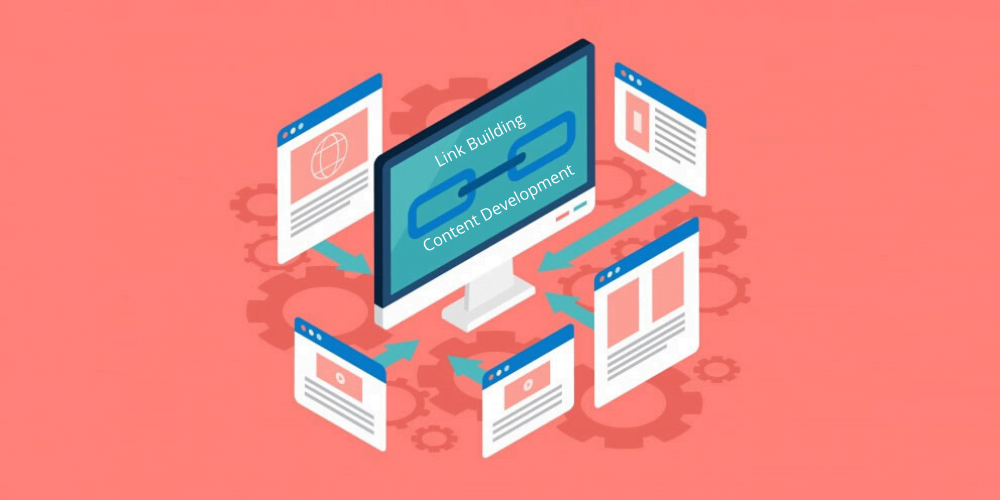
Everyone in the market talks about backlinks and guest posting, but if you ask in detail, fewer people will give you a clear idea about the timing and planning of guest posting.  They prefer to go with random websites without checking the details of the website.  Spammy websites have fewer benefits and more harmful factors involved on a long-term basis.  Google crawler is just 1 step ahead, and once they catch your steps, you won’t be visible in SERP.  Recently one of our SEO clients has seen great growth as per his niche and expectations.  Most startups and individuals hardly know what SEO or SEO Experts can do for their business.  Our client is dealing in the supermarket franchise niche, and as per agencies discussion, he thought SEO couldn’t do much, so it was not a part of the growth strategy.  We have taken SEO and complete digital marketing with full assurance to take his brand to the next level.  After continuous work on On page SEO, he has seen what SEO can do, ranking on competitive keywords and top.  Although a lot of factors are involved in it, it’s not about only on the page. You need to take care of the following things:  Now we have explained to him the core benefits of having guest posts and strong link on the page also stuck somewhere, and at that point, you need a backlink as a rank booster.  Tools like Ahrefs give you a complete idea about the number of backlinks needed to cross your competitor’s page strength.  A backlink is one of the best strategies once you reach the best page level and still hang around 2-3 rd pages of SERP.

When should we plan for a guest post or backlinks? Read More »

SEO Strategies

Top 9 SEO Strategies that best SEO Services in India follow for Better Ranking in 2026

Google has been the most popular and user-friendly search engine for the last two decades. Other search engines get far fewer search counts than Google. As a blogger or a digital marketer, it is important for you to rank on the first page of the search engine. But in these two decades, Google’s ranking has been constantly changing its terms and conditions based on the scenarios.  In 2026 again we need to look after the latest trend that Google is following to give a ranking. Here are the top 9 SEO strategies that the best SEO services in India follow. You can also follow the same to gain ranking on Google.  Here are The Top 9 SEO Strategies For Better Ranking in 2026 1. Write only high-quality content:  No matter in which year we are living, the content will always be the number one in best SEO strategy. Whether you are blogging selling a product or providing a service, content is the key factor in your digital journey.  Always try to write content that can help people to gain something. Your content should have in-depth knowledge and information. In every niche, this is true. Without it, your website is just a showpiece. – Add topic and subtopic of the content you write.  – Try to get proof and sources of the content. It makes the content reliable.  – Use informative images, header tags, and colors to show the important parts of your content.  – Write such that you are talking to your audience.  2. Internal and external linking:  Many don’t know but linking your pages is one of the best SEO strategies of SEO services in India. Internal links are the hyperlink between two pages on your website. External Linking is using hyperlinks between two different websites. Google and other search engines have crawling software that checks the data and structure of your website. Internal linking guides Google to different pages of your website. More internal linking helps to get a higher ranking in Google.  Similar is with external linking. Here you put links to different websites on your web pages. One example is affiliate links where you direct a visitor to the seller’s website.  You must add only reliable links to your websites.  3. Get backlinks:  Generating backlinks for your website is the off-page best SEO strategy. People are ready to pay hundreds of dollars for creating backlinks from a renowned website. However, there are many free platforms that can give you backlinks.  – Backlink strategy is a long-term game.  – It takes a lot of consistent effort and is not easy.  – It would be good if you first learned it from a digital marketing training institute, as you can make many minor and major mistakes in your initial journey.  Also Read: 5 Backlink Checker Tools for Everyone in 2026 4. Keyword Optimization:  Keywords are a group of words that people type into the search engine whenever they want to find something. Using keywords is the best SEO strategy of SEO service in India you can ever follow. When you are writing content for your products and services, you must add the right keywords to it. This is a tested and proven technique that anyone can use with a little creative approach to his/her content. Find what people write about most to search for content like yours. Keyword relates to the intent of the user.  – Find keywords in Google Keyword Planner.  – Use the keyword in your blogs, your image properties, the meta-description in blogs, and even in social media content.  – Write LSI keywords as they also describe the content.  – Writing keywords in the URL is also a great strategy to get a high ranking.  – Write keywords in the Title and headers.  – Prevent keyword stuffing. 5. User experience:  All your efforts do not matter if a user does not enjoy visiting your website. The user is the king that we all want to entertain. It is a user who will support you in going big.  Always think about how simply you can present your website to your visitors. They must find your website attractive and a worthy place for their time. Your major focus should be on getting new traffic as well as retaining the old traffic.  – Put high-quality content.  – Don’t put too many ads on your website.  – Keep it simple and classy.  6. Content-length:  It is debatable that Google’s ranking depends on how long content you write. However, many people consider it one of the best strategies for SEO services in India. This is a variable factor. Different platforms have different requirements. Google prefers 1000–1200 word-length blogs on any website. However, you can write as much as you can. Social media platforms prefer content within the 300-400 word limit.   Longer content means you can put more hyperlinks and images in that. You can also go into an in-depth discussion with your audience.  7. Mobile friendly website:  A Mobile is a very advanced device. It is easy to use and easy to carry. Smartphones have brought the whole world into our hands. Today more than 60% of the whole population uses mobile for surfing websites. It means 6 out of 10 people are reading this blog on their phones.  If you want to gain more visitors, you must make your websites mobile-friendly. This best SEO services in India strategy will help you to reach out to a large mass of audiences who don’t have a personal computer.  8. Domain Authority:  Domain authority refers to the worthiness of your website in the eyes of Google. It is very important that you understand this technical factor. Google will never promote any kind of spam. It is a must that you earn the trust of Google so that the company will not hesitate to list you on the first page of a Google search.  There are three factors that increase the domain authority of your website.  – Backlinks from the websites having

Top 9 SEO Strategies that best SEO Services in India follow for Better Ranking in 2026 Read More »

A Quick Guide to Improving Your SEO

Topic Clusters: A Quick Guide to Improving Your SEO

Want to show Google that you’re an authority on a certain topic? Then you should make topic clusters your go-to content marketing strategy. The year is 2024, and SEO has progressed once again. As you read this, Google is very likely tweaking its algorithm even more, and subject clusters are on the horizon. Yeah, I know, What are topic clusters? There’s another another SEO method to learn! But here’s the deal: as we enter the new year, topic clusters will remain the rock ‘n’ roll star of SEO. They can help you become noticed by displaying your knowledge in specific areas. While creating a content strategy based on these clusters may seem intimidating, if done effectively, it will place you on the fast track to the top pages of Google. The good news is that mastering subject clusters isn’t difficult. The second piece of good news is that everything you need to know will be covered right here. We’ll walk you through every stage of the topic clustering process in this post, from ideation to final implementation of your own topic clustering method. What Are Topic Clusters? A subject cluster is made up of several pieces of information that are all connected to one another in some way. For example, if the major topic is SEO, a subtopic may be obtaining backlinks, and another may be voice search optimization or image SEO. All of these subjects are interconnected and are part of the same larger picture. What is the aim of it all? For starters, Google and other search engines prefer in-depth and topic-based material versus shallow content filled with keywords just for the sake of ranking. Furthermore, search engines want you to provide greater value, knowledge, and consistency. A subject cluster allows you to develop more thorough material to educate your visitors on a certain issue. Topic clusters, when used correctly, may help you organise your material in a clean manner, and Google like to scan websites that are simple to traverse. “Bingo!. Anatomy of a Topic Cluster So you’ve got the big concept, but you’re having trouble seeing a subject cluster. Take a look at one of them, for example: Pillar page– All subject clusters begin with a pillar page, which is the main topic. This is a page dedicated to a broad topic, such as digital marketing. This pillar page should have long-form material and be thorough and informative. It might be a ‘how-to’ guide or a ‘ultimate guide,’ for example. It should be simple to read and well-organized, with subheadings and connections to relevant themes and websites. Content clusters–  A content cluster is an article that supports the pillar page. It must always connect back to your pillar page and be relevant to the content of your pillar page. It can be shorter and less in-depth, but it must still be well-organized and understandable to humans and Google. Let’s imagine one of your pillar pages is Digital Marketing 101: A Beginner’s Guide to Digital Marketing Terms. An article on social media marketing, which is a subset of digital marketing, may be a content cluster. Hyperlinks– Hyperlinks are the last piece of the puzzle that connects your subject groups. Basically, you need to include an internal link to your main page from every single content cluster so that Google understands they’re all linked. By connecting many internal sites like this, you’re demonstrating to Google that you’re an authority on a certain issue. How Do Topic Clusters Influence Your Search Position? Topic clusters aid Google’s understanding of your site’s content. This is significant because, over time, search engines have moved their attention from keywords to pure value and expertise. You gain more authority and show Google that you have the high-value content that your readers and clients are seeking for by developing subject clusters. The more value you provide, the more visitors will trust your website — and the higher Google will rank it as a result. It’s also important to make your site structure simple and easy to comprehend, since this will assist Google crawl and index your site more quickly. Furthermore, when it comes to improving internal connections, subject clusters might be the genuine thing. It helps you to start obtaining a lot of organic traffic once it’s done correctly. Does it seem too good to be true? Take a look at the following examples of topic cluster pages that generate thousands of organic visitors per month: How to Build a Cluster Content with Pillar Content with example Many content strategies fail because they do not consider the domain’s content ecology. This essay delves into how I go about creating Cluster and Pillar content. Cluster material was crucial, and it helped me achieve my first success. I performed keyword research in the area where my pillar material was located ( main keywords or services ). I came up with ten ideas, and the team came up with a blog post on each of them. The topics were good, but the results were unexpected. Where I expected traffic, it didn’t come, but a blog with zero search volume keywords started bringing me traffic, and then I started working on the quality of more blogs that were lacking in rank, and all of these cluster topics have given me a huge boost to my pillar topics and keywords . Although I have yet to create a link on that cluster issue that has begun to generate results for me, it has gradually assisted me in developing a strategy for my service-oriented site. When properly implemented, this sort of strategy ensures that each piece of content helps to increasing your authority, trustworthiness, and competence in the eyes of search engines. Here, based on my expertise, I’ll offer subject cluster examples for a better and clear comprehension, so let’s get started. Consider the topic of “resume writing services.” A foundational piece of information on “how to develop a catchy Resume and why do you require resume writing services” would

Topic Clusters: A Quick Guide to Improving Your SEO Read More »

Copyright © 2026. All Rights Reserved. | Proudly Managed & Developed by AP WEB WORLD

Call Now WhatsApp Now