Why Digital Marketing Matters for Small Businesses Today?
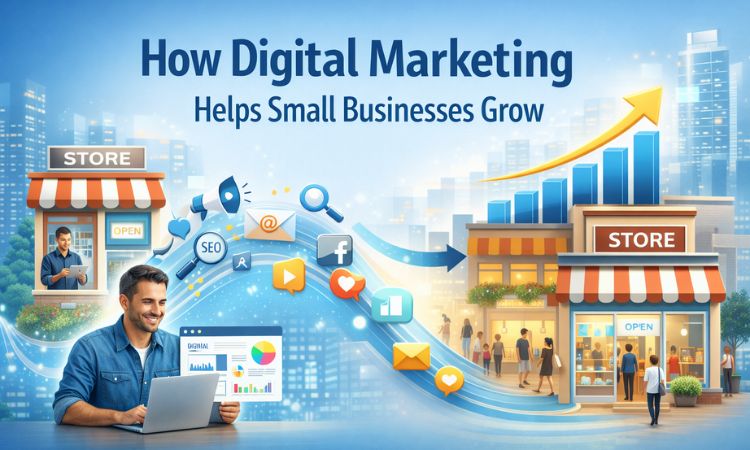
For all the small businesses, having a strong online presence is truly more than just helpful. Over and above that, it’s like having a secret recipe that attracts customers without even relying solely on foot traffic or word of mouth. You can just think of digital marketing for small business like a well-organized kitchen: each strategy is an essential ingredient that, when combined, creates a divine dish that people keep coming back for. Local SEO is like placing your shop at the busiest street corner online so that customers can find you easily. Social media strategies play roles like a friendly shopkeeper who gently greets, guides, and interacts with every passerby, building trust and familiarity. On the other hand, engaging content is almost like a menu having irresistible offerings such as blogs, videos or other types of posts, that perfectly capture attention and show your expertise. While email campaigns work like a personalized invitation to your loyal customers, reminding them why exactly they loved your service or product in the first place. In this guide, we’ll explore these essential strategies in detail, share some tactical ways to refine them, and highlight the real example of small businesses that have turned online tactics into loyal customer bases. What Is Digital Marketing for Small Businesses? Digital marketing for small businesses is a process of promoting products, services, or even brands through online mediums to reach and engage customers effectively. This approach helps businesses grow by getting connected with the right audience at the right moment. For small businesses, it’s truly a cost-effective way to compete with larger and known brands. That’s because this approach leverages the internet to increase visibility, drive leads, and turn them into loyal customers. It actually involves understanding the target audience, crafting meaningful content, and utilizing data-driven strategies to measure performance and optimize campaigns. Unlike traditional marketing, digital marketing allows businesses to interact directly with customers, personalize messages, and track their results in real time. Key strategies include: Search Engine Optimization AI SEO Social Media Marketing Content Marketing Email Marketing Paid Advertising Core Digital Marketing Components Every SMB Should Know Digital marketing for small businesses is all about being visible online, connecting with the right customers, and growing your sales steadily. For SMBs, it’s obviously not about getting everything done at once. Beyond that, it’s about making a focus on the strategies that really deliver measurable results. Here’s a breakdown of the core digital marketing components every SMB should understand: 1. Website & Landing Pages: Your website is just like your online store. It should be visually appealing, easy to navigate, and load quickly. If it fulfills all these goals, then people will feel comfortable exploring here. Your landing pages work like a special display window that highlights specific products, services, or other kinds of offerings in order to encourage users to take action. 2. Search Engine Optimization: It’s the technique to make your website rank among the top searches in the search engines. By using relevant keywords, optimizing content, and maintaining accurate local listings, your business appears in search results exactly when potential customers are looking at what you offer. It’s like making sure your signboard can be seen from miles away. 3. AI-Driven SEO (Smart Optimization): AI SEO takes traditional SEO a step ahead. This is because it uses data and automation in order to improve results faster. AI helps identify search intent, optimize content structure, predict keyword opportunities, and improve ranking based on real-user behaviour. For small businesses, AI SEO makes optimization more efficient than ever, reduces guesswork, and improves accuracy in online marketing. 4. Content Marketing: Content is your storytelling tool. Blogs, videos, guides, and social posts help you answer customers’ questions, provide true value, and demonstrate your expertise. For example, a local bakery shop that shares baking tips online attracts interest even before customers step into the shop. 5. Social Media Marketing: Social media connects you directly with your audience. Regular posting, engagement, and community building help you in creating brand awareness, promoting relationships, and driving social traffic to your site. Furthermore, social platforms also provide insights into customer behaviour and preferences. 6. Email Marketing: With email marketing, you can maintain direct communication with your existing and potential customers. When you send targeted updates, offers, or even newsletters, it helps retain customers, improve repeat sales, and build loyalty. It’s also a kind of cost-effective retention strategy. 7. Paid Advertising (PPC) Actually, paid campaigns on some crucial platforms like Google Ads or other social media enable businesses to target specific audiences precisely. And these campaigns generate immediate traffic, complement organic strategies, while delivering measurable ROI when managed effectively. 8. Analytics and Tracking: Analytics tools track your website’s performance, campaign success, along with user behaviour. These tools actually provide actionable insights that perfectly guide marketing decisions, optimize budget allocation, and enhance overall strategy effectiveness. 9. Reputation and Review Management: Your online reviews matter a lot. It influences purchasing decisions. It involves actively managing feedback, addressing genuine concerns, and highlighting positive reviews that build credibility, trust, and a competitive edge. 10. Conversion Rate Optimization (CRO): CRO focuses on optimizing the percentage of visitors who complete the desired action on your website. It involves analyzing user behaviour and redefining the process by which businesses can maximize the value of their current traffic without additional advertising spend. Turn Your Website Into a 24/7 Lead-Generating Machine Proven SEO & Digital Marketing for Small Businesses Get Started Today The Importance of Digital Marketing for Small Businesses Today Digital marketing plays an important role in how small businesses drive traffic, build trust, and grow their business sustainably in this digital-first economy. As most of the buying decisions start online, having a strong digital presence can directly make an impact. Here’s why digital marketing for small businesses has really become essential today: Helps You Reach More Customers, Locally and Globally If you own a small business, then digital marketing allows you to appear in local searches and also reach your audience
Why Digital Marketing Matters for Small Businesses Today? Read More »