Digital Marketing Consultant in India – Pranav Jha

June 2025

google ai mode search in india

Google Has Released AI Mode for Google Search Users in India

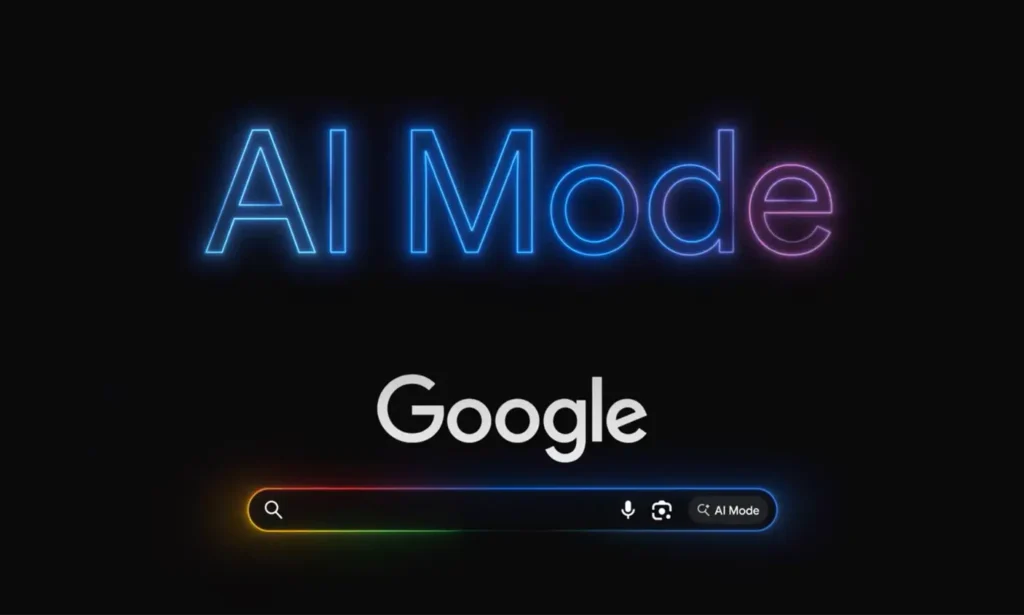
Finally, Google AI Mode is now available in India; it’s time to explore it. Google has officially rolled out its new AI-powered Search Generative Experience (SGE), called “AI Mode,” for users in India. Earlier this year, Google launched it in the USA, and now, after successful implementation, it has launched it in India. You may think, “Here comes another AI Tool.” But it’s not an AI tool. It’s an integrated part of Google Search. Google is the Gemini 2.5 AI model, which powers Google AI Mode, Google’s most powerful AI search, and Google has built it to solve the most complex problems. This functionality is available in Google Search Lab, which you can access here: “Google Search AI Mode“. Once it is fully available, it will significantly change user search patterns.Search for whatever’s on your mind. The Gemini 2.5 AI model powers Google AI Mode, offering a more interactive search experience. “When you visit the provided link, this is how the Google AI Mode interface appears, allowing you to type or speak your query and receive AI-powered responses.”The new Google AI Mode experiment in Search uses Gemini’s advanced reasoning, thinking, and multimodal capabilities to help with even your most challenging questions. You can ask whatever’s on your mind and get an AI-powered response with the ability to explore further with follow-up questions and helpful web links. AI Mode does the heavy lifting for you, intelligently organizing information and giving you easy-to-digest breakdowns. How Google AI Mode Process Data and Produce Final Output “This is not a confirmed or definitive conceptualization of how Google processes data; however, it represents a possible interpretation based on available information and industry observations.” Google AI Search in India: Why Now? India’s massive user base (over 870 million) and strong interest in AI make it an ideal launch market. With many people already trying external AI tools, Google aims to keep them in its ecosystem by offering AI Mode after successful US testing. India’s mobile-first, multilingual audience also provides valuable insights for refining this conversational search experience. Results of AI Mode in the USA as earlier Google introduced Google AI Mode in the USA : Rollout: AI Mode was initially an experiment in the US and has since been fully rolled out.Increased Query Length: Searches are two to five times the length of traditional Google searches. Changes in search patterns make user intent clearer. New Features: Google adds features like “Deep Search” and analysis features for sports and financial queries. Shopping Features: Features like virtual try-on and an “agentic checkout” are included. Impact on SEO due to AI: The focus shifts to optimizing content for AI interpretation. Job Market Impact (Estimated): Analysts predict potential short-term job losses due to automation, particularly in routine tasks. Estimated net job losses in the US due to AI from 2025 to 2029 could be around 4 to 5 million, although AI will also create new jobs. Conclusion Now, search patterns will help brands that have done much work on their branding activity to have a strong content presence in Google. AI Mode Google Search marks a clear shift in how Search works – blending AI-generated answers with traditional results.People working in Search engine optimization can work closely on Google AI mode and try to observe the resulting pattern. Serving user intent and offering real value still matters, but how your content is found changes. Think of Google’s AI as a collaborator. If your content is helpful, in-depth, and well-structured, there’s a real opportunity to show up in AI-powered answers. The future of Search is here – those who adapt will stay visible. FAQs 1. How do I turn on AI Mode in Google Search? AI Mode is currently available as an opt-in experiment in Google Search Labs. To try it, open Google Search (on mobile or desktop) and tap the Labs icon. Then, join the AI Mode experiment and enable it. You may need to join a waitlist and confirm your Google account. Once turned on, Google Search will let you ask questions with AI Mode when it’s available. 2. What new features does AI Mode bring to Search? AI Mode turns the search bar into a Q&A assistant. It lets you ask long, complex questions and get back a one-stop answer powered by generative AI. You can follow up with more queries, and the AI will continue the conversation. It also supports multimodal Search: you can speak your query or even use Google Lens images to inquire about visual things. The answers come with clickable links to the web, so you can dive deeper if needed. 3. How does AI Mode find information? AI Mode uses a customized Gemini language model plus Google’s search index. When you ask a question, the AI breaks it into parts and runs multiple searches in parallel (“query fan-out”). It retrieves information from web pages, Google’s Knowledge Graph, news, shopping data and more, then synthesizes this into a concise answer. 4. How does AI Mode affect publishers and SEO? AI Mode changes the dynamics of search traffic. For publishers, there’s both opportunity and risk. Good news: high-quality content that directly answers complex queries can appear in AI answers or supporting links – a new chance for visibility. Bad news: users may get the answer on Google’s page for some factual queries and never click through, leading to lower traffic. 5. How should SEOs prepare for AI Mode in India? Start by following Google’s advice: create helpful, high-quality content. Use structured data (schema) to mark your content so Google’s AI can easily interpret it. Optimize your pages to answer specific user questions clearly (FAQs, How-Tos, People Also Ask). Focus on building expertise and covering whole topics (entity- and topic-based SEO). Monitor Search Labs feedback and Google announcements, and adapt your strategy as AI Mode evolves.

Google Has Released AI Mode for Google Search Users in India Read More »

seo strategies for ecommerce websites

10 Must-Know SEO Strategies for eCommerce Websites

There are two primary ways to increase your eCommerce website’s visibility on search engine result pages (SERPs): Search Engine Optimization (SEO) and Pay-Per-Click advertisements, also known as paid ads. In this blog, we will discuss SEO strategies for an eCommerce website to make your eCommerce website visible on the search engine result pages. What is eCommerce SEO? SEO for eCommerce website is the process of optimizing your online store so it ranks higher in organic search results. In other words, it’s the process of improving your store’s visibility on Google, Bing, etc., so shoppers find you without clicking on paid ads.For example, the paid ad appears above the organic results in this SERP mockup, and effective eCommerce SEO aims to get your site into that valuable organic section. By improving SEO for an eCommerce website, you drive more qualified traffic and sales without paying per click. In fact, as per the Semrush study, higher organic rankings help you attract more organic traffic, reach potential shoppers, build trust, and gain a competitive edge.Searchers rarely go beyond page one of Google, so if your site isn’t ranking high, you’re missing out on traffic, leads, and conversions. In short, good SEO means your products and store show up when customers search, which is crucial for eCommerce success. 10 SEO Strategies for eCommerce Websites Strategy #1: Conduct In-Depth Keyword Research Effective keyword research is more than finding phrases – it’s choosing the right ones based on data and using them strategically. Here’s how to enhance the process: 1. Use Data to Pick Keywords Monthly Search Volume & Difficulty: In tools like Google Keyword Planner, Ubersuggest, or Semrush, check each keyword’s average monthly searches and its difficulty or competition score. Aim for terms with decent volume but moderate or low difficulty, especially if your site is new or smaller. For example, “affordable saree online India” might have higher volume but also higher competition; a related long-tail like “handloom cotton saree Jaipur online” could balance volume and ease of ranking. Trends & Seasonality: Look at search trends over time. Keywords tied to festivals or seasons (e.g., “Diwali gift hampers”) may spike at certain times. Update your research regularly (quarterly or before major sale seasons) so you capture new patterns or emerging products. 2. Group and Prioritise by Intent & Potential Informational vs. Transactional: Label keywords based on whether users are researching (“how to style red dress”) or ready to buy (“ buy red dress for women”). Prioritise transactional terms for product pages and consider informational ones for blog posts or guides that feed into your sales funnel. Local & Long-Tail Focus: In India, adding location or niche qualifiers helps. For instance, “online kurta shop Ahmedabad” or “best monsoon raincoat for men India” often have lower competition and clearer purchase intent. Group these separately so you can assign them appropriately (e.g., local landing pages or region-specific promotions). Apply the ‘Intent’ filter to view only informational and transactional keywords. Don’t forget to hit ‘Apply’ to activate the filter.”3. Decide Where to Use Each Keyword Product Pages: Use high-intent transactional keywords in product titles, URLs, meta titles, and meta descriptions (e.g., “Buy Bluetooth Earbuds with Noise Cancellation”). Also place related terms in headings (H1/H2), bullet lists of features, and image alt text. Category Pages: Target broader, mid-intent keywords here (e.g., “Women’s Ethnic Wear Online”) in the page title, introductory paragraphs, and H2s. A brief descriptive intro helps search engines understand the page focus. Blog & Informational Content: Place informational or long-tail keywords in blog post titles, subheadings, and within the content (for example, a post on “How to care for silk sarees after Diwali”). Use these posts to link naturally to relevant product or category pages. Site-Wide Elements: Include your top brand or flagship product keywords in homepage title tags or site-wide banners sparingly, without keyword stuffing. 4. Regularly Refresh Your Research Monitor Performance: Use Google Search Console or SEO tools to see which keywords bring traffic and which pages rank. If a keyword’s performance drops or a new related term emerges, update the content or target pages accordingly. Adapt to Market Changes: New trends, products, or competitor moves can change search behaviour. Schedule periodic reviews (e.g., before festive seasons or quarterly) to add fresh keywords, remove obsolete ones, and adjust priorities. Strategy #2: Optimize Product Pages (On-Page SEO) Product pages are the heart of your store’s SEO. Each product page should be fully optimized:Titles and URLs: Use descriptive, concise product names in both the page title and URL slug. Include key attributes (e.g. https://yourstore.com/kurtas/red-embroidered-kurta-women).Meta title & description: Craft unique, keyword-rich title tags (30–60 chars) and meta descriptions (70–155 chars) for each product. Start titles with the product name/keyword, and include your brand/store name at the end. Good meta descriptions highlight benefits (e.g., “Free shipping, same-day delivery!”) to improve click-through. Headings: Use the product name as the H1. Break up content with H2s for features, specifications, reviews, and FAQs. For example: H1: Handcrafted Cotton Kurta – Red Floral Pattern H2s: Features, Technical Specifications, Customer Reviews, Q&A. Product Descriptions: Write unique, engaging descriptions that clearly state the benefits and specs. Don’t copy the vendor’s generic description. Highlight what makes your product stand out (e.g., fabric type, craft details, size info) and use relevant keywords naturally. List important specs (dimensions, ingredients, etc.) so searchers find exactly what they need.Product Attributes & Linking: Mention and link product attributes (brand, series, color, gender, size) to the relevant category pages. For example, link “cotton” to a “Cotton Fabrics” page or a “women’s clothing” page to strengthen internal links.High-Quality Images: Include clear, high-res product photos (e.g., front, side, detail shots) and optimize them. Name image files descriptively (e.g., red-floral-kurta.jpg), add keyword-rich alt text (“Red embroidered kurta for women”), and compress images to balance quality and speed. Also use the modern WebP format if possible for faster loading. Finally, include images in an image sitemap so Google can index them.Product Schema Markup: Add JSON‑LD Product schema (including name, image, description, offers, availability, ratings) so search

10 Must-Know SEO Strategies for eCommerce Websites Read More »

how to rank in chatgpt

Want to Rank in ChatGPT? Here’s What You Need to Know

ChatGPT has surpassed 1 billion monthly users recently. Instead of typing queries into Google (the biggest search engine in the world), many users now ask ChatGPT directly for answers or advice. Google, meanwhile, has introduced features like AI Overviews – AI-generated summaries at the top of search results. This shift means it’s time for content marketers, bloggers, and business owners to adaptThis blog explains what it means to “rank in ChatGPT,” which factors influence AI visibility, how to rank a website in ChatGPT (or similar AI tools) that points users to your site, AI SEO, ChatGPT algorithm, and more. What Does “Rank in ChatGPT” Mean? ChatGPT isn’t a traditional search engine that ranks pages. Instead, it’s a natural language model built on a transformer architecture: it converts your question into tokens, analyses their meaning through attention mechanisms, and then generates a coherent answer by predicting the most likely next words. Behind the scenes, it also uses retrieval tools or plugins (like Bing) to fetch up‑to‑date web snippets. To rank in ChatGPT essentially means that when someone asks ChatGPT a question, the AI’s answer includes your content or mentions your brand. In practical terms, your site is cited or referenced in the AI’s response. For example, if ChatGPT is asked about “how to do digital marketing,” and it includes a summary or link from an article on your site, then you have effectively ranked in ChatGPT’s output. This idea is sometimes called Generative Engine Optimization (GEO) – optimizing your content so AI tools like ChatGPT will “recommend” it. Key Factors That Influence Content Visibility in ChatGPT There are hundreds of factors that determine whether ChatGPT will use your content to show in the results. These factors somehow overlap with traditional SEO, but with an AI twist.The following five factors play a significant role in influencing your content’s visibility in ChatGPT: Authority & Trust: ChatGPT favors trusted, authoritative sources. So, the first step for you is to increase your site’s domain authority. However, an organization’s online reputation, such as strong reviews – use Trustpilot, ResellerRatings, Yotpo, etc., expert authors, or authoritative backlinks, makes it more likely to be cited. AI ranking studies show that sites with higher authority and positive mentions get picked more often, especially for questions like “best product” or “top solution”. Relevance & Expertise: After authority, the second biggest in ChatGPT ranking factors is your expertise. Your content must directly answer the user’s question. ChatGPT evaluates how closely your page matches the query. Well-researched, in-depth content written by experts on the topic is more likely to be used. In other words, covering the topic thoroughly and accurately, in language that matches the user’s intent, boosts your chances. (This mirrors Google’s idea of search intent, but applied inside the AI’s decision process.) Semantic SEO & Entity Coverage: It’s important to write content with a semantic structure or balanced context. Modern LLMs essentially build a “web of knowledge” based on entities (people, places, concepts) and their relationships. As an SEO expert with over 13 years of experience, I’ve noticed creating content with an entity-optimized page is seen as a trusted source and more likely to appear in answers. This means covering the key topics and keywords, using clear terminology, and even using structured data (schema) so that AI understands what your content is about. Backlinks & Mentions: In ChatGPT, the basic phenomenon of knowing you’re an expert remains the same as Google that tends to favor content that’s linked to or mentioned by other reputable sites. Pages with strong backlink profiles or lots of brand mentions signal authority. For example, if your article is cited in a well-known industry roundup, Wekipedia, or question-and-answer platforms like Quora and Reddit, ChatGPT is more likely to consider it reliable. In short, off-page SEO (backlinks/PR) still matters for AI visibility. You need to double down on genuine backlinks and PR. Freshness & Structure: AI tools prefer up-to-date, factual answers. Also, well-structured content helps the AI extract answers. Pages that organize information with headings, bullet lists, and Q&A formats are easier for ChatGPT to pick up. In fact, experts note that ChatGPT often prefers pages where content is framed as a series of clear questions (H2s) followed by concise answers and bullet points. Such a structure (similar to FAQ or featured snippet style) makes key points stand out to the AI. How to Optimize Content to Be Found and Cited by ChatGPT To improve your chances of “ranking” in ChatGPT, apply these optimization tactics: Use Structured Data (Schema): Implement schema markup (especially FAQ, HowTo, Product, Article schemas) on your pages. For example, marking up FAQs means your questions and answers are explicitly defined, making it easier for ChatGPT to include them in answers. Answer Questions Clearly: Write content in a Q&A style. Use question headings (H2 or H3) for common user queries, followed by a short, direct answer (1–3 sentences), then bullet-point lists for additional details. This mirrors the format ChatGPT itself uses, so your content becomes a natural source for its answers. Keep paragraphs short and language simple – the goal is to make each answer easily digestible by the AI and the user. Target Conversational Keywords: Focus on long-tail, natural-language phrases that people actually say. Instead of “SEO strategies,” try phrases like “how to improve website ranking” or “best SEO tips for bloggers.” These conversational keywords align with how users talk to chatbots. SEO experts emphasize using long-tail, natural keywords to match the way users phrase queries. Publish Authoritative, Well-Linked Content: Create in-depth, high-quality articles or guides. Include statistics, examples, and cite reputable sources with outbound links – this builds credibility. Encourage other sites (especially well-known blogs or news sites) to link to your content or mention your brand, as authoritative mentions are a big trust signal. So invest in relationships with other thought leaders, guest post on respected sites, and get your content featured. Include FAQs and Featured-Answer Style Content: Add an FAQ section or “People Also Ask” style list at the end

Want to Rank in ChatGPT? Here’s What You Need to Know Read More »

Copyright © 2026. All Rights Reserved. | Proudly Managed & Developed by AP WEB WORLD

Call Now WhatsApp Now