


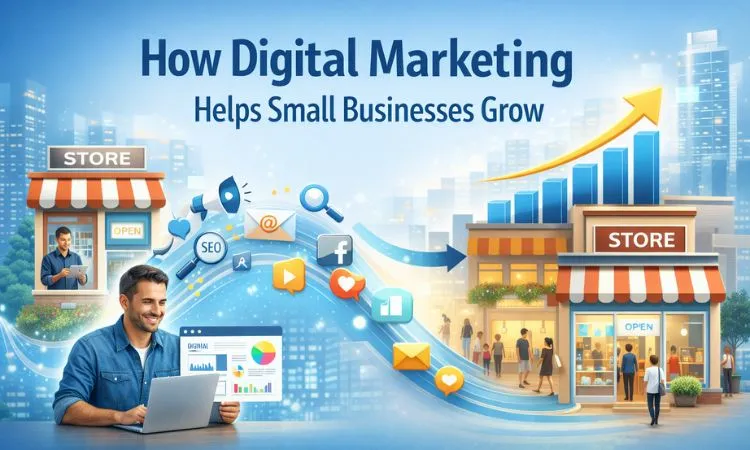
Local SEO is like placing your shop at the busiest street corner online so that customers can find you easily. Social media strategies play roles like a friendly shopkeeper who gently greets, guides, and interacts with every passerby, building trust and familiarity. On the other hand, engaging content is almost like a menu having irresistible offerings such as blogs, videos or other types of posts, that perfectly capture attention and show your expertise.
Table of Contents
ToggleWhat Is Digital Marketing for Small Businesses?
- Search Engine
- Optimization
- AI SEO
- Social Media
- Marketing
- Content Marketing
- Email Marketing
- Paid Advertising
Core Digital Marketing Components Every SMB Should Know
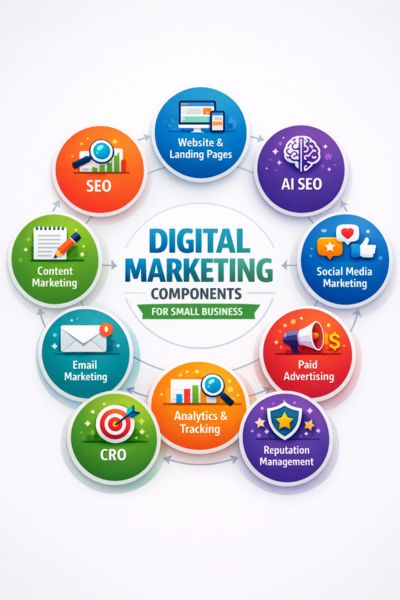
Here’s a breakdown of the core digital marketing components every SMB should understand:
1. Website & Landing Pages:
Your website is just like your online store. It should be visually appealing, easy to navigate, and load quickly. If it fulfills all these goals, then people will feel comfortable exploring here. Your landing pages work like a special display window that highlights specific products, services, or other kinds of offerings in order to encourage users to take action.
2. Search Engine Optimization:
It’s the technique to make your website rank among the top searches in the search engines. By using relevant keywords, optimizing content, and maintaining accurate local listings, your business appears in search results exactly when potential customers are looking at what you offer. It’s like making sure your signboard can be seen from miles away.
3. AI-Driven SEO (Smart Optimization):
AI SEO takes traditional SEO a step ahead. This is because it uses data and automation in order to improve results faster. AI helps identify search intent, optimize content structure, predict keyword opportunities, and improve ranking based on real-user behaviour. For small businesses, AI SEO makes optimization more efficient than ever, reduces guesswork, and improves accuracy in online marketing.
4. Content Marketing:
Content is your storytelling tool. Blogs, videos, guides, and social posts help you answer customers’ questions, provide true value, and demonstrate your expertise. For example, a local bakery shop that shares baking tips online attracts interest even before customers step into the shop.
5. Social Media Marketing:
Social media connects you directly with your audience. Regular posting, engagement, and community building help you in creating brand awareness, promoting relationships, and driving social traffic to your site. Furthermore, social platforms also provide insights into customer behaviour and preferences.
6. Email Marketing:
With email marketing, you can maintain direct communication with your existing and potential customers. When you send targeted updates, offers, or even newsletters, it helps retain customers, improve repeat sales, and build loyalty. It’s also a kind of cost-effective retention strategy.
7. Paid Advertising (PPC)
Actually, paid campaigns on some crucial platforms like Google Ads or other social media enable businesses to target specific audiences precisely. And these campaigns generate immediate traffic, complement organic strategies, while delivering measurable ROI when managed effectively.
8. Analytics and Tracking:
Analytics tools track your website’s performance, campaign success, along with user behaviour. These tools actually provide actionable insights that perfectly guide marketing decisions, optimize budget allocation, and enhance overall strategy effectiveness.
9. Reputation and Review Management:
Your online reviews matter a lot. It influences purchasing decisions. It involves actively managing feedback, addressing genuine concerns, and highlighting positive reviews that build credibility, trust, and a competitive edge.
10. Conversion Rate Optimization (CRO):
CRO focuses on optimizing the percentage of visitors who complete the desired action on your website. It involves analyzing user behaviour and redefining the process by which businesses can maximize the value of their current traffic without additional advertising spend.
Turn Your Website Into a 24/7 Lead-Generating Machine
The Importance of Digital Marketing for Small Businesses Today
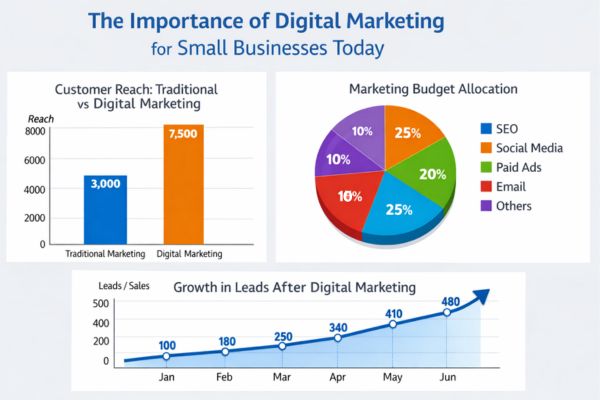
Digital marketing plays an important role in how small businesses drive traffic, build trust, and grow their business sustainably in this digital-first economy. As most of the buying decisions start online, having a strong digital presence can directly make an impact. Here’s why digital marketing for small businesses has really become essential today:
Helps You Reach More Customers, Locally and Globally
If you own a small business, then digital marketing allows you to appear in local searches and also reach your audience beyond physical boundaries through online platforms
Cost-Effective Compared to Traditional Marketing
Small businesses’ online marketing gives flexible budgets, better reach, and higher efficiency as compared to print, TV, or even outdoor advertising.
Better Targeting and Personalization
Furthermore, online marketing for small businesses enables precise targeting according to location, interest, along with intent, and ultimately makes campaigns even more relevant and effective.
Builds Credibility and Brand Awareness
When you adopt multiple strategies, you make a consistent digital presence. And, this consistent digital presence through website, content, as well as reviews, helps you establish trust and long-term brand recognition.
Real-Time Analytics and Data-Driven Decision
Using digital tools gives you instant insights into performance, and helps you refine strategies and optimize spend.
Improved Customer Engagement and Loyalty
Social media, content, and email marketing perfectly keep your customers connected and promote repeat interactions.
Transform Your Online Presence
The Business Benefits of Digital Marketing
1. Increased Website Traffic and Online Visibility
Strategic SEO, content, and social media presence always ensure your business appears where exactly customers are actively searching, driving consistent and relevant traffic to your website.
2. Higher Conversion and More Leads
When you have targeted campaigns and optimized user journeys, it helps turn your visitors into leads and customers, and improve overall conversion efficiency.
3. Lower Customer Acquisition Cost (COC)
Digital marketing primarily focuses on precise targeting, reduces wasted spend, and lessens the cost of acquiring each customer.
4. Measurable ROI and Budget Optimization
Real-time analytics makes it really easy to track performance, calculate ROI, and shift budget toward strategies that provide the highest returns.
How to Get Started with Digital Marketing
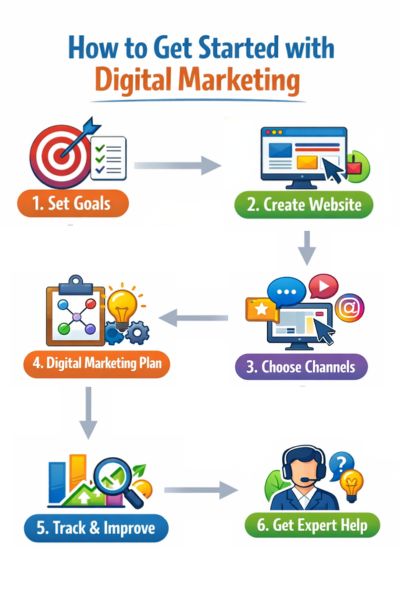
Step 1: Get Clear on What You Want to Achieve
Before even doing anything online, decide your goals first. Do you want more enquiries, more sales, better brand visibility, or even repeat customers? Digital marketing for small businesses works best when every activity is tied to a specific outcome. At the same time, determine who your perfect customer is, what they actually search for, where exactly they spend time, and what type of conversation they want solved.
Step 2: Set Up a Website That Actually Works
Your website doesn’t need to be fancy. However, it must be effective. It should load faster, look good on mobile, explain your offering clearly, and guide visitors toward action. Just think of it as your digital headquarters, where everything else in online marketing leads back here.
Step 3: Pick the Right Digital Marketing Channels
As we discussed earlier, you don’t need to be on every platform. Just choose channels according to your audience and goals. SEO (Search Engine Optimization) works well for long-term visibility, social media helps with engagement, email builds loyalty, and paid ads drive quick traction. Strongly focus on what delivers impact, not noise.
Step 4: Create a Simple Digital Marketing Plan
This is where consistency comes in. Decide what content you’ll create, how often you’ll publish, which platforms you’ll use, and how you’ll track success. A plan keeps your efforts aligned and prevents random, ineffective marketing.
Step 5: Track, Learn, and Improve
Use analytics tools to get to know what’s really working. Take a look at your website’s traffic, leads, conversions, and engagement. Digital marketing allows real-time learning, so use that data in order to refine and optimize continuously.
Step 6: Get Expert Help When Needed
If time, skills, or clarity are holding you back, then working with a SEO consultant or even an agency can truly fast-track growth. Actually, the right expertise helps you avoid costly mistakes and build a scalable strategy.
Smart Businesses Invest in Digital Growth
Conclusion
Digital marketing for small businesses works really best when it’s built with clarity, consistency, along with right expertise. Everything, from core channels like SEO and content to modern approaches like AI-driven optimization, every element has a specific role in creating visibility, trust, and measurable growth. When you combine these components together strategically, then digital marketing stops being confusing and starts delivering real business outcomes.
Moreover, the key is not doing everything at once. But, it’s doing the right things in the right order that is guided by data, customer behaviour, as well as clear goals, and this is exactly where experience matters. Working with an experienced professional ensures that your efforts are focused, future-ready, and aligned with long-term business success.
As a digital marketing consultant, I’ve experienced that when strategy replaces guesswork, then digital marketing stops being an expense and starts becoming a reliable growth engine for small businesses.
