




Many businesses are doing digital marketing these days. They’re posting on Instagram, running Google Ads, sending emails, publishing blogs. Sometimes, doing all of these together at the same time. But most of them still don’t really know what is actually working.
Traffic is coming. Budgets are getting spent. Reports are shared every month. Everyone looks busy. But is the marketing actually bringing leads? Customers? Real revenue? That is where things start becoming a little unclear.
This is why tracking the right KPIs for digital marketing becomes so important. Good KPIs tell you whether your marketing efforts are helping your business grow, or you are just throwing money on random channels and hoping something works out.
The best marketers, agencies and business owners don’t make decisions based on guesses. They look at numbers. They look at trends. They check performance regularly. And no, tracking 50 different metrics is not necessary at all. Most businesses only need a few important KPIs to understand what is actually happening. So let’s look at the most important ones.
Table of Contents
ToggleWhat Are KPIs for Digital Marketing?
KPI stands for Key Performance Indicator. Sounds complicated. But it is actually quite simple.
A KPI in digital marketing is basically a measurable number that helps to understand whether your marketing is doing its job properly or not.
For example:
- How many people are visiting your website?
- How many are clicking your ads?
- How many are becoming leads?
- How many are eventually becoming customers?
- How much money are your campaigns actually generating?
These are all KPIs.
Think of KPIs like checkpoints. They tell whether you are moving in the right direction or just wasting time and budget on the wrong things.
A strong digital marketing KPI strategy focuses on metrics that actually affect business growth. Not just numbers that look impressive in presentations.
Why Are KPIs Important for Businesses?
Without KPIs, digital marketing just becomes a guessing game. You might think your Instagram campaign is performing amazingly because it got lots of likes.
But what if none of those likes turned into actual leads?
You might be getting thousands of website visitors every month.
But what if nobody is buying anything?
This is exactly why KPIs matter so much. They help businesses to:
- Understand what is working.
- Spot problems early
- Improve campaign performance
- Reduce wasted ad spend.
- Generate better quality leads.
- Make smarter decisions overall.
For agencies and even a Digital Marketing Consultant, KPIs become even more important, actually. Clients don’t want to hear “trust us, things are going well.”
They want data. That is why marketing agency KPIs, advertising agency metrics and digital agency client quality assessment metrics play such a big role in client reporting and campaign analysis.
Top 15 KPIs for Digital Marketing
There are hundreds of metrics you can track today. Open your analytics dashboard, and you’ll probably find enough numbers to give yourself a headache.
The problem? Most of them don’t really matter. Or at least they don’t matter equally.
The goal isn’t to track everything. The goal is to track the stuff that tells you whether your marketing is actually helping the business grow. Let’s get into the ones that deserve your attention.
1. Website Traffic
This is usually the first thing people look at. How many people are visiting your website? Simple.
If traffic is growing, that’s usually a good sign. More people are finding you. More people are discovering your content. More people are checking out your products or services.
But don’t get too excited just because traffic is going up. I’ve seen websites getting thousands of visitors and still struggling to generate sales. Traffic is important. Traffic alone isn’t.
2. Organic Traffic
Paid traffic is nice. Organic traffic is nicer. Why? Because you don’t have to pay for every single visitor.
Organic traffic shows how many people are finding you through search engines. Someone searches for a question on Google, sees your page, clicks it, and lands on your website. That’s organic traffic.
If you’re spending time on SEO, publishing blogs, testing new SEO Strategies, or playing around with Top AI SEO Tools, this is one KPI you should definitely watch.
3. Click-Through Rate (CTR)
Imagine 1,000 people see your ad. Only 5 clicked it. Not great. Now imagine 100 people click it. Much better. That’s basically what CTR measures. It tells you whether your headlines, ads, emails, and offers are making people curious enough to click.
Because let’s be honest. If nobody clicks, nothing else matters.
4. Conversion Rate
This is where things get serious. Traffic is cool, but it’s always the conversions that pay the bills. Your conversion rate tells you how many visitors actually do what you want them to do. Maybe that’s buying a product. Maybe it’s filling a form. Maybe it’s booking a call.
Whatever the action is, conversion rate tells you how effective your marketing really is. A website with 1,000 visitors and 100 conversions is often doing better than a website with 10,000 visitors and 10 conversions.
5. Cost Per Click (CPC)
If you’re running ads, you’re paying for clicks. The question is…
How much? That’s what CPC tells you.
A lower CPC can be great. But don’t become obsessed with getting the cheapest clicks possible. Cheap traffic isn’t always good traffic. Sometimes the clicks that cost more are the ones that actually become customers.
6. Cost Per Lead (CPL)
Leads aren’t free. Every lead has a cost attached to it. CPL tells you exactly what that cost is.
If you’re spending ₹20,000 and generating 200 leads, that’s one thing. If you’re spending ₹20,000 and generating 20 leads, that’s a completely different story.
This KPI quickly tells you whether your lead generation campaigns are becoming more efficient or less efficient.
7. Customer Acquisition Cost (CAC)
This one separates the marketers from the business owners. Because business owners don’t really care how many clicks you’re getting. They care about customers.
CAC tells you how much money you’re spending to acquire one paying customer. Not a lead. Not a website visitor. A real customer who gives you money.
And honestly, every business should know this number.
8. Return on Investment (ROI)
At some point, somebody is going to ask:
“So… are we actually making money from this?”
That’s where ROI comes in. ROI tells you whether your marketing investment is paying off. It’s one of those numbers that immediately gets everyone’s attention during meetings. Because nobody wants to keep spending money on campaigns that aren’t generating returns.
9. Return on Ad Spend (ROAS)
ROAS is very similar to ROI. The main difference is that ROAS only focuses on advertising. You spend money on ads. The ads generate revenue.
ROAS tells you how much revenue you’re getting back. If you’re spending ₹1 and making ₹5, that’s a pretty good day. If you’re spending ₹1 and making 50 paise…You might have a problem.
10. Bounce Rate
Ever clicked on a website and immediately left? Yes. We’ve all done it.
That’s a bounce. Bounce rate tells you how often visitors leave without doing anything else. Sometimes a high bounce rate is normal. Sometimes it’s a giant red flag.
Maybe your page is loading slowly. Maybe the content is boring. Maybe visitors expected something completely different. Whatever the reason, it’s worth paying attention to.
11. Average Session Duration
This metric tells you how long people stick around. Are visitors spending 20 seconds on your website? Or five minutes? Big difference.
Usually, longer sessions mean people are interested in what they’re reading or watching. Of course, context matters.
But generally speaking, if people are hanging around longer, you’re probably doing something right.
12. Lead-to-Customer Conversion Rate
Not all leads are created equal. Some leads become customers. Some disappear into the void forever. This KPI tells you how many leads actually turn into paying customers. And this number can reveal problems that other metrics completely miss.
A campaign generating lots of leads might look successful. Until you realise none of those leads is buying anything. That’s why agencies often include this in their digital agency client quality assessment metrics.
13. Social Media Engagement Rate
Forget followers for a second. Seriously. A page can have 100,000 followers and still get almost no engagement. That’s why engagement matters more. You need to be concerned about comments, shares, saves, and conversations. These are signs that people actually care about your content. And when engagement starts dropping, it often becomes one of the first warning signs of bigger Digital Marketing Challenges ahead.
14. Email Open Rate
Every few years, somebody declares email marketing dead. And every few years, email proves them wrong. The email open rate tells you how many people are opening your emails. Simple. If nobody opens your email, they won’t click anything inside it either. Which means your subject line is doing a lot more heavy lifting than most people realise.
15. Customer Lifetime Value (CLV)
This KPI changes how you think about customers. Most businesses focus on the first sale. CLV focuses on all the sales that come after. Because one customer might buy once and disappear. Another customer might keep buying from you for years. Huge difference.
The higher your CLV, the more aggressively you can invest in acquiring customers. That’s why smart marketers pay very close attention to this number. And it deserves way more attention than it usually gets.
Tools to Track Digital Marketing KPIs
Thankfully, spreadsheets are not needed for everything anymore. There are plenty of tools that make tracking much easier.
- Google Analytics: Undoubtedly, this is the first tool any business should have. It allows tracking of web traffic, users’ behaviour, bounce rate, conversions, and session length.
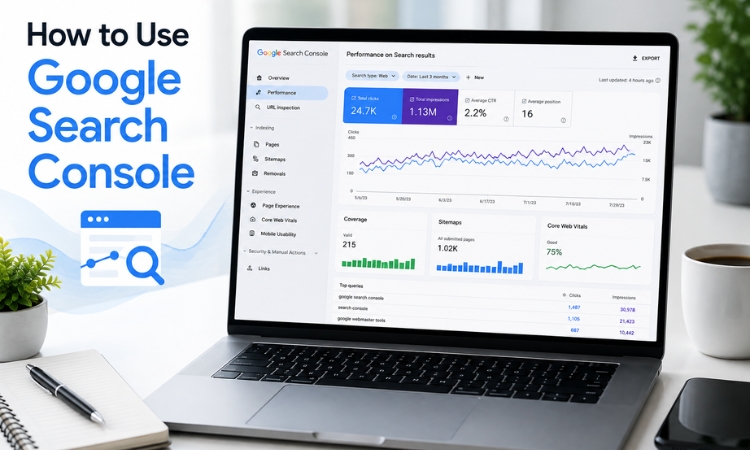
- Google Search Console: In case you care about SEO, then this tool will be your favourite. It tracks clicks, impressions, CTR, and keywords’ performance.
- Google Ads: Google Ads gives you comprehensive information about your campaigns, including CPC, CTR, conversion rate, and ROAS. All advertising agency metrics can be tracked using Google Ads.
- Meta Business Suite: If you are active on Facebook and Instagram, this tool helps to track reach, engagement, audience growth and ad performance.
- HubSpot: HubSpot consolidates all marketing, sales, and customer metrics into one single dashboard. It allows monitoring of lead generation and conversion rates, email campaigns’ performance and customer journey.
- SEMrush/Ahrefs: These are two of the most famous SEO platforms nowadays. Very helpful for businesses focusing on advanced SEO Strategies.
Conclusion
Digital marketing creates a lot of data. Sometimes, too much data. The challenge is not finding metrics. The challenge is figuring out which metrics actually matter for your business.
That is where KPIs for digital marketing come in. They help to understand what is working, what is not working and where the next opportunity might be hiding.
Tracking every number available is not necessary. Start with the basics, like traffic, conversions, leads, customers, and revenue. Once you understand those numbers, making better marketing decisions becomes much easier.
And that is what good marketing is really about. No more reports. Not more dashboards. Just better decisions backed by better data.
FAQs
- What are KPIs in digital marketing?
KPIs in digital marketing are measurable metrics used to evaluate marketing performance. Examples include website traffic, conversion rate, CTR, ROI, CAC and customer lifetime value.
- Which KPI is most important for digital marketing success?
There is no one universal answer. The most important KPI in digital marketing depends on your business goals. However, conversion rate, ROI, CAC and CLV are usually among the most valuable metrics.
- How many KPIs should a business track?
Most businesses can get great insights by tracking around 5 to 10 important KPIs. Tracking too many often creates confusion instead of clarity.
- What is the difference between ROI and ROAS?
ROI measures overall profitability by comparing revenue and total costs. ROAS focuses specifically on revenue generated from advertising spend only.
- Which tools can be used to track digital marketing KPIs?
Popular tools include Google Analytics, Google Search Console, Google Ads, Meta Business Suite, HubSpot, SEMrush and Ahrefs.