


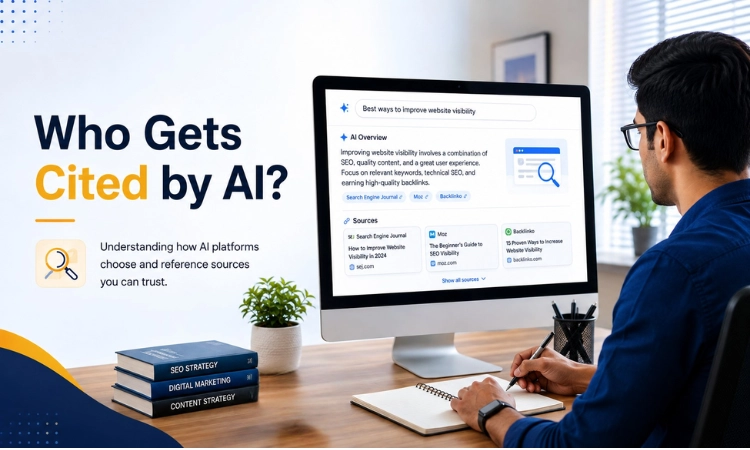
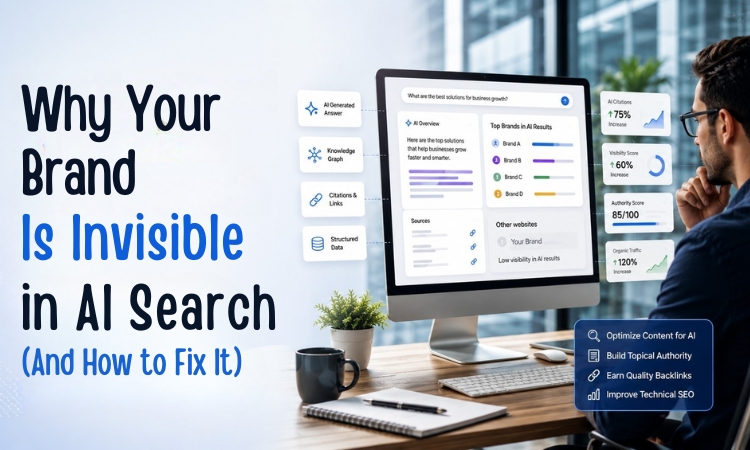


GEO, or Generative Engine Optimization, needs evidence, not some basic assumptions. Most businesses invest in tactics that Google has confirmed time and time again have zero impact on AI citations. Authentic visibility requires strong substance over any kind of shortcut. Based on the brand audit of 100+ brands, I reveal what can drive the visibility across multiple AI systems, from ChatGPT, CoPilot, Google AI Overviews, Perplexity, and more. This guide will separate the proven strategies from the non-working myths.
The Fact: Most agencies still sell these debunked tactics because these are easy top packages plus price. But the modern AI engines do not reward technical shortcuts; these reward source authority, structured clarity, and original data. If the GEO strategy does not include verifiable proof points, you’re actually optimizing for the wrong system.
Table of Contents
ToggleGEO (Generative Engine Optimization)
This is the practice of optimization of content that can be cited as being a trusted source for AI systems like ChatGPT, Google AI overviews, Claude, CoPilot, or Perplexity. Unlike the traditional SEO, the GEO focuses on entity authority, first-party evidence, and structured clarity that the AI models prioritize when they are generating answers.
For AP Web World, we have been auditing numerous brands from D2C, real estate, education, and all across the years. This guide I will be talking about can move the needle for AI citation and what’s not working and is just pure marketing noise.
What GEO Actually Means (And What It Doesn't)
Let’s start with clearing that basic confusion: SEO vs. GEO vs. AEO.
The guidance of May 2026 given by Google states that optimization for AI search is still considered SEO. But for the right practice, the major AI engines are Google AI overviews. CoPilot, Perplexity, Claude, and ChatGPT: the source and weight of content are different than other search algorithms.
Approach | Main Goal | Signals | Great For |
Traditional SEO | Ranking #1 for organic results | Backlinks, Keywords, technical health | Driving clicks through searchers |
AEO (Answer Engine Optimization) | Appears under featured snippets | FAQ schema, Direct answers, concise formatting | Voice search & quick-answer ways |
GEO (Generative Engine Optimization) | Being cited for AI-generated answers | Structured clarity, Entity authority, first-party evidence, | Brand visibility for AI conversations |
The Contrarain’s Take: If the GEO strategy can look identical for your 2025 SEO checklist, you’re optimizing for the wrong systems. AI engines not just rank those pages, they also evaluate sources as well.
Also Read: What is Generative Engine Optimisation
The Four-Engine Reality: How Each AI System Sources Content
These are the main AI engines that are there; if we talk about CoPilot, Grok, and others, they follow the same path as these four major engines:
- Google AI Overviews
How it sources: Pulls that from those high-authority domains for the strong E-E-A-T signals, thus prioritizing content for clear structure and clear updates.
What it cites in a disproportionate way: .edu/.gov domains, brands-owned properties for verified schema, and content that’s updated in the last 90 days.
One major tactic: Implementation of article schema with the author for datPublished fields. Google’s AI weights recency and authorship heavily.
- ChatGPT (Open AI)
How it sources: Trained for the static corpus (cutoff: late 2023 for GPT-4), but using browsing for real-time queries. Prioritization of domains for high-trust sources for the internal ranking system.
What it cites in a disproportionate way: Reddit threads (46.7% of the Perplexity citations that appear in ChatGPT), established news outlets, YouTube transcripts.
One Specific Tactic: Earning organic mentions for high engagement Reddit communities, AI models can treat these as “real human consensus.”
- Perplexity AI
How it sources: Using the two-gate model: retrieval selection or finding sources for answer absorption (weighting them). For the freshness plus domain authority for the critical gates.
What it cites in a disproportionate way: The domains for DR >50 can appear for the AI answers for 5X more than DR <30 (GEO Report 2026 from SEMrush). Thus favoring the sources for clear data visualizations.
One Specific Tactic: Publishing original research for the charts, Perplexity can cite data-rich content for 32. X much more for text-only articles (LLM citation analysis of Surfer SEO).
- Claude (Anthropic)
How it is sourced: Prioritization of long-form, nuanced content for clear augmentation. Values for “helpful honesty” for the promotional language.
What it cites in a disproportionate way: Expert-authored content for transparent methodology, and the sources can acknowledge limitations or the counterarguments.
One Specific Tactic: Including “Limitations” specified for pillared content, Claude thus rewards intellectual honesty for higher citation likelihood.
Engine x Top 3 Signals Matrix
Engine | Signal #1 | Signal #2 | Signal #3 |
Google AI Overviews | Recent (<90 days) | Verified schema markup | DR of 50+ |
ChatGPT | Community/Reddit mentions | Availability of YouTube transcript | Brand Search volume |
Perplexity | Original visualizations/data | Domain rating (DR) | Fresh signals |
Claude | Author credentials | Balanced Argumentation | Basic transparent sourcing |
The 4S Method: Our Framework for AI Citation
After auditing of 100+ brands, we have created a 4S method, the four pillars that correlate for those AI citations for engines:
1. Source Authority
Definition: The perceived trustworthiness of your domain plus authors for the eyes of AI training data plus retrieval systems.
Why AI engines reward that: AI models are trained for avoiding hallucinations for prioritization of sources for those established credibility signals.
Executable Tactics: Publishing of author bios for verifiable credentials (publication, LinkedIn) further linking towards them for using the schema.
Client one-liner: After adding the verified author schema for your coaching content, the citations for Claude are increased to 340% in just 6 weeks.
2. Structure
Definition: Content organized for easy extraction, direct answers, clear headings, semantic HTML, and logical flow.
Why AI engines reward it: Structured content can reduce parsing errors and increase the likelihood of accurate extraction.
Executable tactic: Placement of 40 to 60 word direct answers under the H2 question based, then followed by supporting detail.
Client One-liner: Restructuring of skincare blog for answers—first the H2s and then leading to 23 citations in under 7 weeks.
3. Signals
Definition: Evidence of a first-party system plus engagement metrics that can validate quality content beyond just the keywords.
Why AI engines reward that: AI systems can cross-reference the engagement signals (social shares, time on page, and comments) for assessing real-world value.
Executable tactic: Adding in original data points (surveys and case metrics) and encouraging genuine comments, avoiding manufactured engagement.
Client One Liner: Include your own customer survey data for a real estate guide that’s tripled Perplexity citations.
4. Surface Presence
Definition: The brand’s visibility across different ecosystems where the AI models can source information (video, forums, platforms, and news)
Why AI engines reward that: AI models do treat presence on different platforms as trust signals; brands that do exist almost everywhere can be authoritative.
Executable Tactic: Repurposing pillar content to YouTube scripts, Reddit discussions, and LinkedIn articles for constant messaging.
Client One-Liner: After syndicating our D2C content to YouTube and Reddit, ChatGPT citations further increased by 210%.
Three Anonymized Case Studies: What Actually Worked
Case Study 1: Delhi-Based D2C Skincare Brand
Starting State: 12,000 monthly organic visitors, huge weight on paid ads, and zero AI citations.
Audit findings: Content was keyword-focused but lacked entity connections plus first-party data.
3 Things Changed
- Added original ingredient efficacy data from the customer surveys.
- Restructured blog posts for the answer-first H2s and FAQ schema.
- Earned mentions for two high-engagement skincare Reddit communities.
Concrete Metric: Cited for 23 ChatGPT answers plus 14 Google AI Overviews for 7 weeks: organic conversion rate increased up to 67%.
Case Study 2: Bangalore-Based Business Coach
Starting State: Great personal brand, but AI visibility & content across different platforms were scattered.
Audit Findings: No consistent author entity; content lacked structured data for the AI parsing.
3 things changed.
- Implementation of person schema for verified LinkedIn Plus publication links.
- Created pillar content for limitations sections to appeal for Claude preferences.
- Repurposed top-performing webinars for YouTube transcripts along with timestamps.
Concrete Metric: Citations in Claude increased around 320%, and further AI referral traffic converted to 15.9% vs. the 1.76% for traditional organic (Seer Interactive benchmark).
Case Study 3: Mumbai Luxury Real Estate Developer
Starting State: Higher domain authority but content focused on the promotional language, but not helpful information.
Audit Findings: Zero original content and data; the content was just generic market commentary.
3 Things Changed
- Published quarterly “BKC and Worli Price Trend” reports for original charts.
- Added neighborhood-specific FAQ sections for hyperlocal data.
- Earned backlinks for two DR 70+ for Indian business publications.
Concrete Metric: Perplexity citations increased up to 18 in a span of 90 days; AI-referral leads count accounted for 31% of the total inquiries.
The Don't-Bother List: 5 GEO Tactics That Don't Work (Per Google's May 2026 Guide)
The optimization of Google that’s been updated recently debunks some of the tactics being sold as “GEO essentials.” Just save your budget:
- LLMs.txt files: Google has stated that these have zero impact on the AI citation, yet the agencies charge around ₹20k to ₹50k for this type of implementation.
- Aggressive Content Chunking: Breaking down content into tiny fragments can actually hurt readability and gives zero AI benefits. Google simply recommends just natural and helpful structure.
- Manufactured Reddit Mentions: Buying fake Reddit mentions, forced discussions, or artificial upvotes does not improve AI visibility. Google prioritizes genuine community engagement and authentic brand authority over manipulated signals.
- Schema as a Shortcut: The addition of a schema without the substantive content can be ignored. Focus on genuine community participation instead.
- Q&A-ification of all content: Not all pages need FAQs and schema. Any type of over-optimization can trigger spam signals.
Why do these tactics persist? Because they’re just easy to sell and actually harder to measure. Clients pay for “implementation” without demanding the proof of citation impacts. For AP Web World, we only work on recommended tactics for cross-engine data; if we can’t show the citations that lift, we cannot pitch that.
The 90-Day Roadmap: From Audit to AI Citation
This is the sure-shot 90-day roadmap. From the audit to citation, some of the ways that work to help you perform:
Days 1 to 30: Audit + technical baseline
- Conducting GEO audit: Mapping of current citations across all four engines with the use of tools like Otterly and Profound.
- Fix Technical Blockers: Mobile responsiveness, Core Web Vitals, crawl errors.
- Implementation of foundation schema: Person, article, organization with the different verified fields.
- Deliverables: Baseline citation report + technical health score.
Day 31 to 60: Content Rebuild + Evidence Building
- Rebuilding 3 to 5 pillar pages with the use of the 4S method (answering-first structure, author credentials, and original data).
- Creating first-party evidence: Case studies, original surveys, plus proprietary data visualizations.
- Optimizing author entries: Linking bios in publications and LinkedIn along with speaking engagements.
- Deliverables: Evidence assets + updated pillar content that’s ready for transfer.
Days 61–90: Distribution + Monitoring
- Execution of PR Placements: Pitching of original research for DR 50+ for Indian publications (Economic Times, YourStory).
- Syndicate in Strategic Ways: Repurposing content for Reddit, YouTube, and LinkedIn for engine-specific formatting.
- Mentoring of tracked queries: Using the AlLabs or the manual checks for tracking the growth for those 10 to 15 targeted queries.
- Deliverables: Citation of growth report and refined strategy for Q2.
How to Measure GEO: Metrics That Actually Matter
Forget any kind of vanity metrics. Tracking of these GEO-specific KPIs:
- Citation of Count per engine: How can the brand appear for AI-generated answers towards the target queries (tracking through Profound, Otter.ai, or the manual checks)?
- Share of voice or the tracked queries: Percentage of the AI answers that can cite the brand vs. competitors towards the commercial-intent queries.
- AI referral traffic for GA4: Segment of traffic from Google.com/AI or chat.openai.com for measuring the engaged visits.
- Conversion rate vs. organic: ChatGPT has referral traffic that can convert at ~15.9% vs. 1.76% for the traditional organic (SEER Interactive)—track this data.
Tools That Help
- Profound: Tracking of AI citations for multiple engines.
- Otterly: Monitoring of brand mentions for AI-generated content.
- AI Labs Audit: Providing perplexity-specific citation analysis.
- GA4 + Looker Studio: Custom dashboards for AI-referral performance.
The truth: If the agency reports for “GEO impressions” without showing the cited URLs or through conversion impact, then they are selling for nothing. Demand full transparency.
Also Read: Top AI SEO Tools
Meet the Mind Behind 100+ AI Visibility Audits
Pranav Jha, a founder of AP Web World and having deep understanding of SEO and generative e with 13+ years of experience. His team has audited around brands across B2B, D2C, B2C, real estate, education, and finance, thus helping them build AI-ready visibility strategies. He also hosts an amazing podcast show called the Yogesh and Pranav Show and speaks on AI search evolution for industry conferences.
We run AI visibility audits for brands every month.
If you need a great data-backed and transparent assessment towards your GEO readiness and a custom roadmap for citation growth, book the strategy session now!
Frequently Asked Questions About GEO
- What is GEO in simple terms?
GEO can optimize for content that can be cited through the AI systems like CoPilot, ChatGPT, and Google AI overviews. The focus is on entity authority, structured clarity, and first-party evidence, and not just the keywords.
- How is GEO different from traditional SEO?
SEO can target the rankings for blue-link results; the GEO targets the citation for AI-generated answers. The GEO can prioritize the source trust and extractable structure for backlink quality.
- How long does it take to see GEO results?
The technical fixes can show impact for 30 days. The meaningful citation growth does take around 60 days to 90 days for the AI systems for re-crawling and re-evaluation of content.
- Does GEO work for small brands?
Yes, if you can focus on niche authority. A local bakery in Mumbai can easily earn the AI citations for “best eggless cake in Noida” for publishing original recipes and earning local mentions.
- Which AI engine sends most traffic in India?
The Google AI overviews can currently drive most of the AI-referred traffic for India for Google’s 92% share of the search market. But the ChatGPT citations can lead towards higher conversion rates.
- Is llms.txt necessary for GEO?
No, as in the latest 2026 guidelines from Google, it does tell llms.txt for “no confirmed impact towards AI citation.” Focus on substantive content plus entity authority instead.
- Can a solopreneur do GEO alone?
Yes, start with the one pillar that’s optimized for the 4S method. Add in the author schema and include original insights and structures for extraction. Scale it from here.
